
Behavioral Interview Styles Compared: McKinsey PEI vs BCG vs Bain (2026)
How McKinsey PEI, BCG fit questions, and Bain behavioral interviews differ in format, depth, and weight, plus how to adapt the same story bank to each firm.
On this page
McKinsey runs a formal Personal Experience Interview scored on its own. BCG blends fit questions into a conversational process tied to role values. Bain weighs teamwork and culture signals more heavily than either peer. Same story bank, three different cuts: this guide shows the cut each firm expects and where to practice it.
New to behavioral interviews overall? Start with the consulting behavioral interview guide for STAR mechanics and the 20 most common prompts. This page answers the narrower question: how the top firms differ.
McKinsey PEI: one story, drilled to the bottom
McKinsey's official interviewing guide describes current Personal Experience Interview themes and preparation expectations. Read that page close to your interview because names and process details can change. The format stays consistent: the interviewer picks one experience and probes it in layers. What exactly did you do first. Why that choice and not the alternative. What you would change. Candidates who prepared summaries instead of detailed examples run out of material by the third follow-up.
Preparation implication: map at least one detailed, truthful example to every theme in the current official guidance, and rehearse the decision points inside each story, not just the headline. For a question bank organized by theme, use the McKinsey PEI questions guide. For the full format, read the McKinsey PEI guide.
McKinsey also applies a PEI lens inside its case interviews: each case component is scored on its own, so ownership and reasoning show up in the case, not just in the dedicated PEI session. BCG and Bain score more holistically at the end, which lets a strong finish rescue a shaky start (ManagementConsulted, May 2026). Practically, this means McKinsey prep never splits into a case half and a behavior half. Narrate your reasoning out loud in every case rep.
Run a McKinsey-style case warm-up
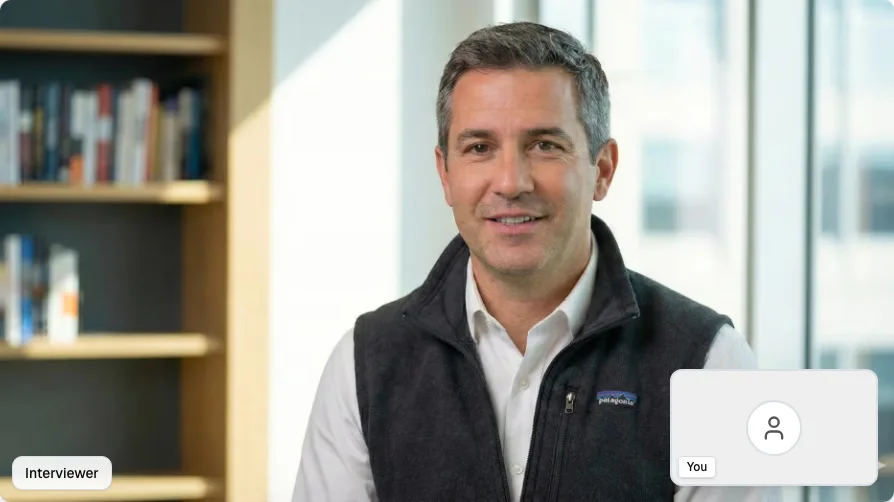
Your interviewer will ask:
“Tell me about a time you led a team through a difficult situation.”
“Describe a time you influenced someone who disagreed with you.”
“Tell me about a time you drove a change despite resistance.”
BCG fit: values evidence in a conversation
BCG's behavioral interview preparation page describes experience and capabilities as evidence against role-relevant values and competencies, not a generic personality match. The interview feels conversational because questions can arrive blended with case discussion rather than in a dedicated session, and the placement and length vary by process. Candidates who treat it as small talk lose: every answer is still scored as evidence.
Preparation implication: follow your invitation for the sequence, and prepare each story as evidence for a named value, not as an interesting anecdote. Keep case skills warm in parallel, since a BCG process can assess both. The BCG case interview guide covers the analytical half.
Rehearse a BCG-style fit answer with AI follow-ups
Bain behavioral: your contribution inside the team result
Bain's official interviewing page explains that interviews can ask candidates to describe past experiences, sometimes framed around a consultant skill. Bain runs the behavioral portion as a dedicated experience interview, typically 10 to 15 minutes paired with the case in each round, not a few minutes of fit tacked on at the start. In practice Bain listens hardest for collaboration: precise personal contribution, honest credit to teammates, and energy that fits a heavy team-staffing model. Claiming the team's result as your work alone is the fastest way to fail this session. For the full question bank, see Bain's fit interview guide.
Preparation implication: rewrite every team story with explicit contribution lines ("I built the model; Priya ran the interviews; we decided together to cut the segment"). Practice saying them without diminishing your own role. The Bain case interview guide covers the case half of the process.
Rehearse Bain-style teamwork answers with AI follow-ups
Side-by-side comparison
Example questions you will actually hear, per firm
McKinsey PEI questions all force ownership detail. The three in the simulator above are representative: a leadership test, an influence test, and a change test. The full theme-organized bank lives in the McKinsey PEI questions guide.
BCG fit questions sound softer but score as values evidence. Expect shapes like "Tell me about a time feedback changed your approach" and "Describe a disagreement you resolved without authority." Each one maps to a named value, so prepare the mapping, not just the anecdote. Volume lives in the 20 consulting behavioral questions.
Bain experience questions center on teams. From Bain's fit interview guide: "Describe a situation where you had to work with someone difficult" (Bain cares about this more than McKinsey does) and "What is the hardest problem you have solved" (resilience and creativity, not just outcomes). Add "Why Bain" answered with specifics, never generics. See why Bain, why BCG, and why McKinsey for firm-specific motivation prep.
Where behavioral shows up, round by round
McKinsey runs two rounds. First round is two back-to-back interviews, each pairing an interviewer-led case with a PEI session. Final round is two to three interviews with Partners or Senior Partners in the identical format, but the cases turn more open-ended, probing goes deeper on business judgment, and the PEI targets different dimensions than first round. Partners are testing whether you can hold your own in front of a CEO. Detail: McKinsey case interview guide.
BCG first round is two interviews of about 45 minutes each: roughly 30 minutes of case plus 15 minutes of behavioral. Final round is two to three interviews with Principals or Partners, more conversational and open-ended, and the fit portion gets deeper as partners test whether you belong in a client boardroom. Detail: BCG case interview guide.
Bain pairs a dedicated 10 to 15 minute experience interview with the case in each round. First rounds increasingly use standardized interviewer-led cases, while final-round partners run candidate-led cases drawn from their own engagements, with latitude to go off-script and test composure under ambiguity. The experience component deepens in finals around one question: would this person represent Bain well with a client CEO. Detail: Bain case interview guide.
Tips and tricks per firm
- McKinsey: never split prep into a case half and a behavior half. The PEI lens follows you into the case, so narrate decisions and trade-offs out loud in every rep. Bring a different dimension per round: reusing the same story twice wastes a scoring slot.
- McKinsey: answer the probe asked, not the story planned. PEI follow-ups deliberately pull you off script. Pausing to think beats filling silence with an adjacent anecdote.
- BCG: learn your invitation before you learn your stories. The values named there decide which evidence counts, so map every story to one value in writing before you rehearse.
- BCG: treat blended fit questions as scored evidence, not small talk. A crisp 90-second values-mapped answer inside a case discussion beats a five-minute ramble anywhere.
- Bain: rehearse contribution lines until they sound natural, not rehearsed. Say them to a partner and ask what you personally did. If they cannot answer, rewrite.
- Bain: prepare one genuine intellectual-curiosity answer. "Something you learned recently that changed how you think" catches candidates off guard precisely because it cannot be STAR-templated the night before.
How to reuse one story bank three ways
Build six to eight truthful stories covering leadership, influence, failure and learning, teamwork, and motivation. Then cut each one three ways before you interview:
- McKinsey cut: add the decision forks. What options did you see, what did you pick, what did it cost, what changed your mind. If a story has no hard decision in it, it is not a PEI story yet.
- BCG cut: attach each story to a value named in your invitation or BCG's preparation page. If you cannot name the value the story proves, the story is entertainment, not evidence.
- Bain cut: isolate your contribution from the team's. Name who else did what. If removing your part leaves the story intact, pick a different story.
Rehearse each version out loud once. The same story told three ways exercises three different muscles, and interviewers at each firm listen for exactly one of them.
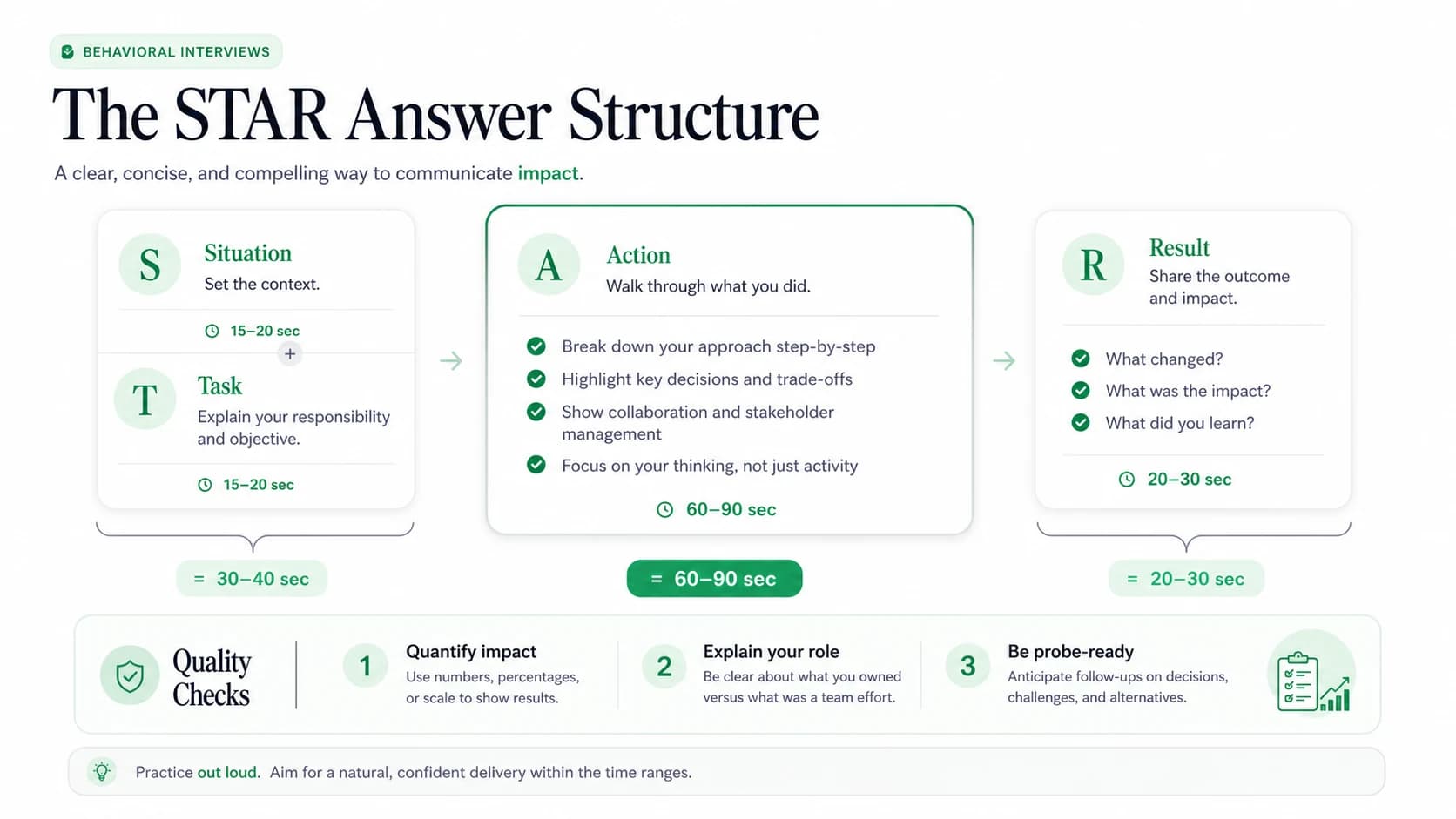
Learn the behavioral method
STAR that survives probing, linked to the live AI interviewer.
Which firm should you prepare first?
Prepare in deadline order, but build PEI depth first regardless of order. McKinsey depth takes the longest to build because every story needs decision-level detail, so start those rehearsals two weeks before anything else. Layer BCG values mapping on top once stories exist; it is editing, not new writing. Finish with Bain contribution lines, which are the fastest change and the easiest to verify out loud with a partner. If all three interviews land in the same fortnight, protect one full rehearsal per firm version rather than three generic run-throughs.
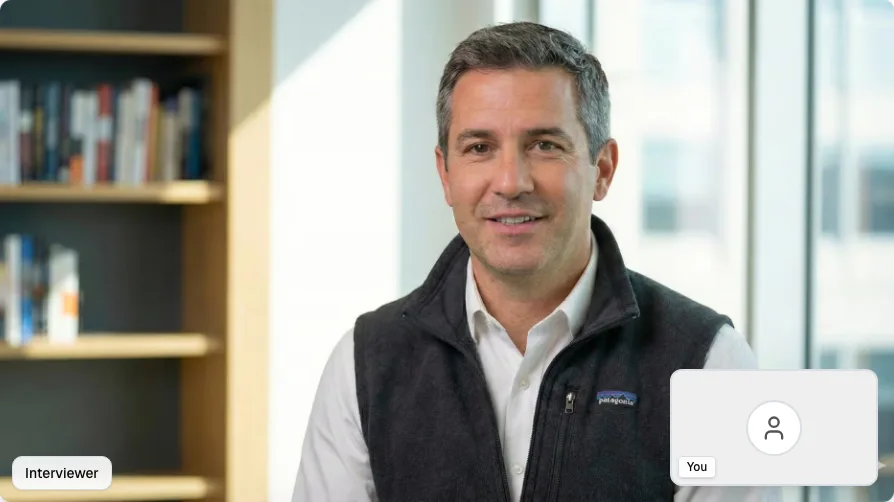
Practice the behavioral half out loud
Reading about styles does not build answers. Rehearse one behavioral answer live, take follow-ups, and get feedback on structure and specificity before your loop.
For question volume after the styles click, work the 20 consulting behavioral questions and compare prep resources in the behavioral resources guide.
Sources
- McKinsey Careers: Interviewing
- BCG Careers: How to Prepare for a Behavioral Interview
- Bain Careers: Interviewing
- ManagementConsulted: McKinsey Case Interview (updated May 2026; per-question scoring and PEI lens inside McKinsey cases)
Frequently asked questions
Resources and related guides
- Practice a real behavioral interviewPractice
- Browse all free resourcesResource hub
- CaseCoach vs PrepLounge: Which Is Better in 2026?Comparisons · Apr 28, 2026
- PrepLounge vs IGotAnOffer: Honest 2026 ComparisonComparisons · Apr 28, 2026
- RocketBlocks vs PrepLounge: 2026 Side-by-Side ReviewComparisons · Apr 28, 2026
- Soreno AI vs Road to Offer: Which Is Better for Consulting?Comparisons · Apr 18, 2026