
McKinsey Internship 2027: Summer Associate, Pay, Deadlines
A McKinsey internship comes in two main forms at McKinsey & Company. The McKinsey undergraduate internship is the Business Analyst Intern role, which candidates often call the Summer Business Analyst (SBA); the McKinsey MBA internship is the McKinsey Summer Associate program, posted as McKinsey Associate Intern. For the McKinsey summer internship 2027, MBA candidates are recruiting now and the undergraduate window has closed. The Summer 2026 interns have already finished, so undergraduates applying next are aiming at Summer 2028.
How do you get a McKinsey internship?
Pass a resume screen and the Solve assessment, then usually two interview rounds that each pair a Personal Experience Interview (PEI) with a case; an end-of-internship review decides the full-time offer. Click a stage to see what McKinsey tests there and the practice that matches it, or jump to that part of this guide.
 Internship process
From application to McKinsey offer



Pass the resume screen
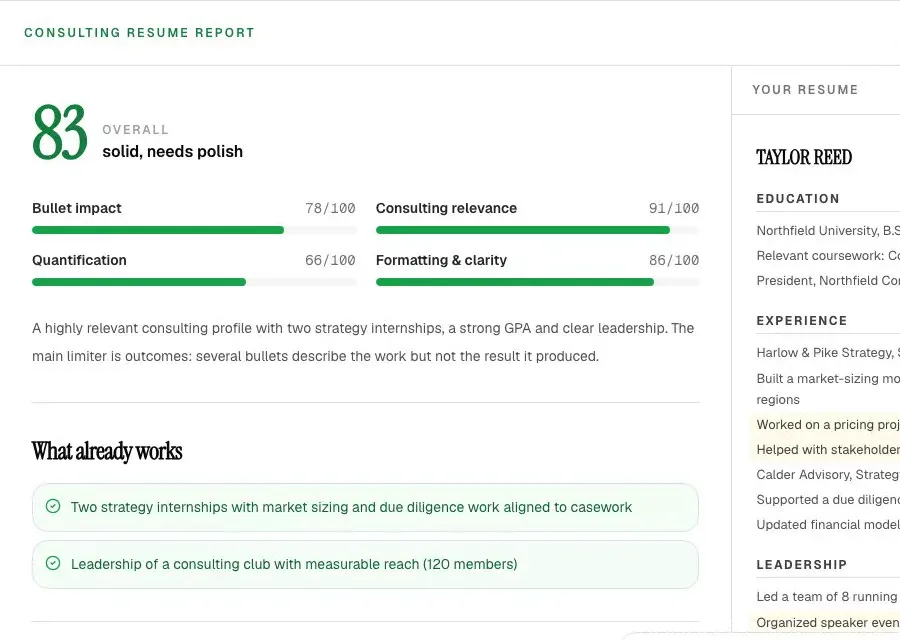
Academic results, quantified impact and leadership. McKinsey's postings say AI may assist the screen. Drop your resume for a consulting-screen grade.
Opening resume uploader...
When do McKinsey internship applications open for 2027 and 2028?
It depends on your degree: MBA candidates apply for Summer 2027 now, on deadlines set by school, while the US undergraduate Summer 2027 window closed on March 29, 2026 and Summer 2028 dates are not posted yet. The cycles below come from McKinsey's official application deadline tool and job board, last checked November 1, 2026:
NowDeadlines by school
Recruiting nowSummer 2027 Associate Intern (Summer Associate)
First-year MBA, PhD, MD and JD students · first-year MBAs apply in the fall
Mar 29Closed
ClosedSummer 2027 Business Analyst Intern (US)
Undergraduates · the window ran January 1 to March 29, 2026
TBANot posted
Not postedSummer 2028 Business Analyst Intern (US)
Current sophomores (class of 2029) · watch early 2027
Aug 11Closed
ClosedFull-time Business Analyst, 2027 start
Seniors · the window ran July 1 to August 11, 2026
Checked on McKinsey's deadline tool and job board, November 1, 2026.
For US undergraduates, the Summer 2027 Business Analyst Intern cycle is over: McKinsey's deadline page listed a January 1 to March 29, 2026 window for most US undergraduate and non-MBA master's candidates when we checked it on June 17, 2026, and a sophomore described applying for the Summer 2027 role in February 2026. Students reported in December 2025 that McKinsey moved US undergraduate recruiting about three months earlier than before. Summer 2028 dates were not posted on November 1, 2026.
For MBA and advanced-degree candidates, Summer 2027 is the live cycle: the Associate Intern posting is up on McKinsey's job board, and the deadline tool above gives the date for your school.
If you are a first-year or sophomore with no window open, get your resume and Solve readiness in place now, since last cycle's undergraduate window opened on January 1. The McKinsey deadlines page tracks dates as McKinsey posts them, and the recruiting deadlines calendar puts McKinsey next to BCG and Bain.
Which McKinsey internship should you apply to?
Apply to the role that matches your degree: Business Analyst Intern for undergraduates, Associate Intern (Summer Associate) for MBA, PhD, MD, JD and other advanced-degree students. Both roles put you on a client service team for 8 to 10 weeks; the seniority bar and pay differ.
Admitted MBA students can also start early through McKinsey Early Access the summer before school, and advanced-degree candidates can attend McKinsey Insight. Sophomores should read the McKinsey SSBA guide, and the McKinsey Business Analyst role guide covers the full-time job a Business Analyst Intern converts into. Some programs are regional: McKinsey's undergraduate page lists one intern role offered only in Austria, Germany, Switzerland and the Netherlands, and Next Generation Women Leaders is a three-day event in Paris (the 2026 edition closed applications on February 23, 2026). McKinsey has also run first- and second-year exposure events such as Ignite; check the students page for what is open in your region before planning around any of them.
What does the McKinsey internship interview look like?
A resume screen, the Solve assessment, then usually two rounds in which every interview pairs a Personal Experience Interview with a case, with partners in the final round. That is the process for most consulting roles on McKinsey's interviewing page, where each interview combines a PEI with a problem-solving case; some roles add an expertise interview. The two rounds, with partners in the final one, are what candidates usually describe.
Solve
before round 1
- Gamified problem-solving test for most consulting roles
- McKinsey says there is no need to prepare
Candidates lose time to the format, not the logic
PEI
every interview
- Two examples for each of four PEI areas
- Follow-up questions dig into one story
Case
every interview
- Interviewer-led: one question at a time
- A structure, an exhibit, a calculation, a recommendation
Rounds
usually two
- Each interview pairs a PEI with a case
- Partners interview in the final round
Some roles add an expertise interview
Solve
McKinsey describes Solve as a gamified assessment that tests natural problem-solving and says "there's no need to prepare." In practice, candidates lose time to the format rather than the logic, so one untimed look at each game is worth it. The McKinsey Solve guide covers each game; you can try a full Red Rock run below, original practice built on the public format rather than an official McKinsey question:
Free Solve practice from Road to Offer: pick a game and play it in the browser. Original practice, not official McKinsey material.
Personal Experience Interview
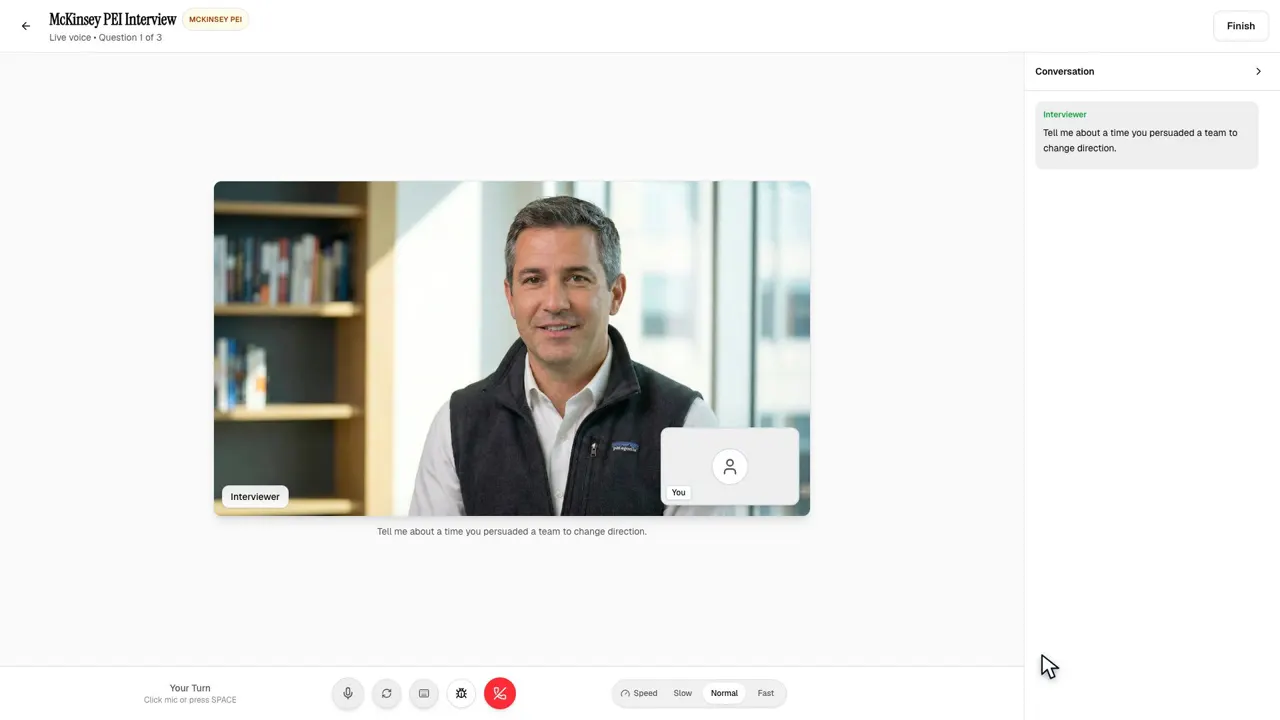
McKinsey asks candidates to come with two personal examples showing impact in each of its four PEI areas, and to explain the challenge and the specific actions they took. Interviewers dig into one story with several follow-ups, so a story that survives three follow-ups beats a polished one that does not. The McKinsey PEI guide explains how stories are scored, and you can rehearse a PEI with live follow-up questions before your first round.
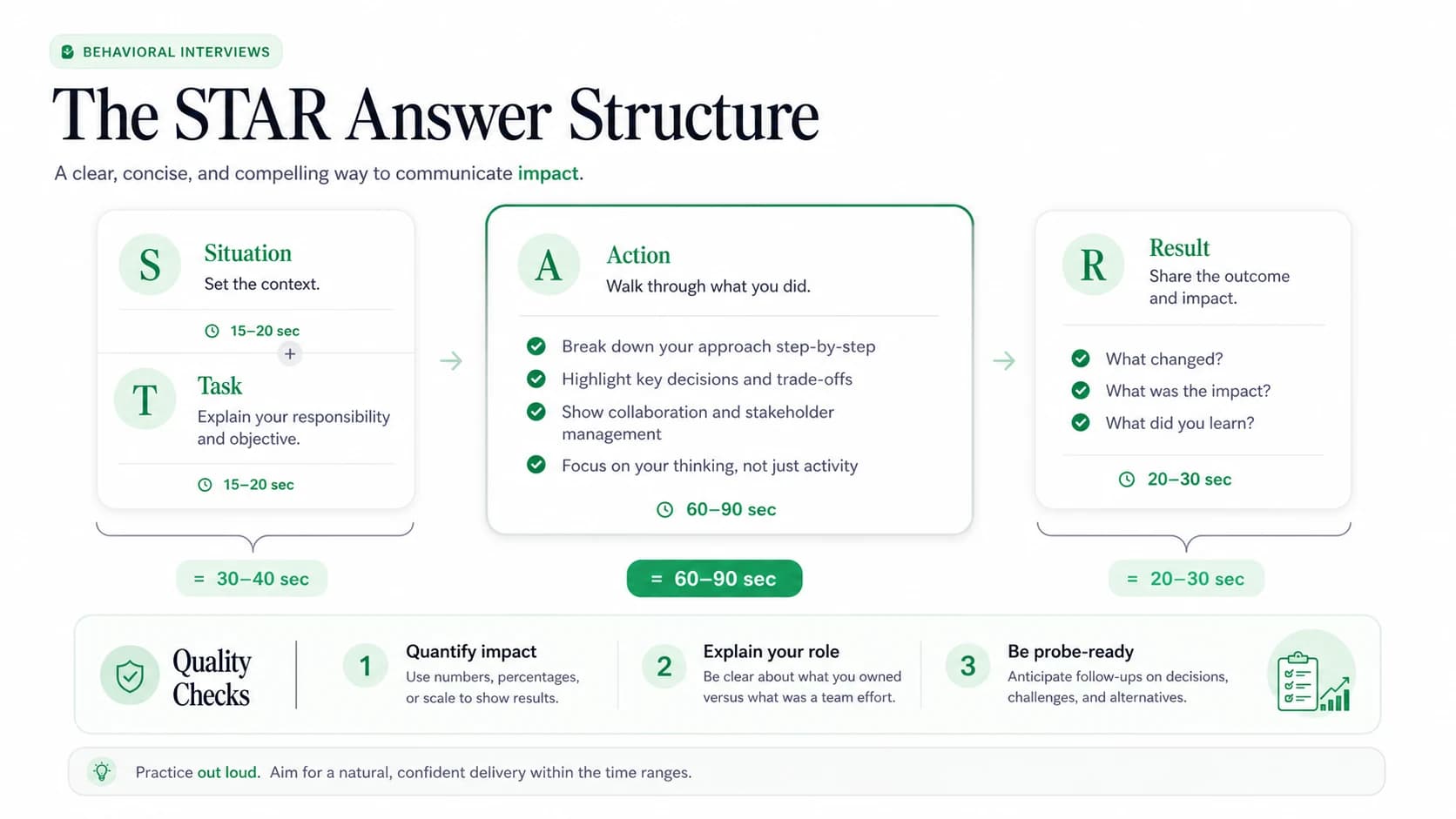
Learn the behavioral method
STAR that survives probing, linked to the live AI interviewer.
Case interviews
McKinsey cases are interviewer-led: the interviewer asks a sequence of questions (a structure, an exhibit, a calculation, a recommendation) rather than letting you drive. McKinsey publishes its own practice cases, such as Beautify (whether a beauty company should train in-store consultants on virtual channels) and Diconsa (financial services through a rural retail network in Mexico). The McKinsey case interview guide covers the scoring, and the McKinsey practice cases page has 10 worked interviewer-led cases for the quant reps. For a rep in the same format, EV Charging Hub Profitability is original practice, not McKinsey material:

Practice for McKinsey in a real case interview
EnergyMedium
What McKinsey allows you to use AI for
McKinsey encourages AI for your resume and practice, and bans it for live interview answers, invented achievements and assessments unless permitted. It states these rules plainly on its interviewing page. Its job postings add that AI may be used to assist recruiters in screening and assessment.
How should you prepare for a McKinsey internship?
Five weeks is enough for most candidates who already have a solid resume: prepare in the order McKinsey tests you, with a concrete finish line for each stage. Start earlier if you have never done a case. Undergraduates with no window open right now can run weeks 1 and 2 this winter and the rest once the Summer 2028 window opens.
Week 1 matters more than it looks: your PEI stories double as resume bullets, so writing both together keeps them consistent. In week 3, practice the interviewer-led format specifically, since McKinsey interviewers steer the case question by question rather than letting you lead. If Solve is scheduled before you finish week 2, move it first; McKinsey usually sends it before the first interview. The McKinsey PEI practice guide has drills for week 4, and why McKinsey covers the motivation question that often opens a round.

Get your McKinsey prep plan
How much does McKinsey pay interns?
McKinsey pays US interns $108,000 a year annualized as a Business Analyst Intern and $189,000 as an Associate Intern (the Summer Associate salary), about $2,077 and $3,635 a week. Both figures come from McKinsey's US job postings, which give one number per role rather than a range. You are paid the prorated amount for the weeks you work.
Both postings add eligibility for a discretionary bonus and benefits including medical, mental health, dental, vision, parental leave and retirement plans. Housing or relocation support, where offered, varies by office, which is why candidate-reported monthly pay online looks inconsistent. The McKinsey salary guide covers full-time pay if you convert.
How competitive are McKinsey internships?
Very competitive, though McKinsey publishes no acceptance rate or GPA cutoff, so every figure online is an estimate. The most cited one, from Management Consulted, puts offers at about 1% of applicants and interviews at 5 to 10%. The 2027 Vault internship rankings rate the program #7 for employment prospects, #13 for prestige and #20 among consulting internships.
What the postings do state is the bar: a degree in progress, rational decision-making based on data, strong written and spoken communication in English and the local office language, and the ability to produce decks, models or written work with little supervision. On a resume that reads as quantified results in school, work or leadership, not a list of titles. The McKinsey resume guide and McKinsey cover letter guide cover the screen in detail.
What do McKinsey interns actually do?
McKinsey interns join a client service team and own part of the work, not a training program. The postings describe contributing to workstreams on real client problems across industries; Associate Interns are measured against the first-year Associate bar and usually own a workstream, while Business Analyst Interns support one with analysis and research. A typical 8 to 10 weeks runs:
- First week or two: firm training, then joining the team and testing the working hypothesis.
- Middle weeks: core analysis on your workstream, such as a cost baseline, market sizing or customer research, plus interviews with client staff.
- Mid-internship: a first client touchpoint, often a working session, and a midpoint feedback conversation.
- Final weeks: building the final deliverable and handing over your analysis.
- Last week: a formal review by your engagement manager and partner, which drives the return-offer decision.
What is the McKinsey return offer rate?
McKinsey does not publish a return offer rate; the full-time offer follows your end-of-internship review. The 80 to 90% figures quoted online come from third-party sites, not McKinsey. The review weighs problem-solving, impact on the client work, how you worked with the team, and how you used feedback. Three habits help: write down your hypothesis for your workstream early and share it with your manager, ask for explicit midpoint feedback while there is time to act on it, and own one piece of client-facing work before the final review. The consulting internship return offer guide covers the mechanics across firms, and the MBA consulting recruiting timeline shows where the Summer Associate fits in the MBA year.
For a cross-firm view, compare the BCG Summer Associate guide and the list of best consulting internships.
Three ways to practice for McKinsey
- Start a free case
Run a full case. 92 cases in voice or guided text, scored on seven dimensions.
- Try a free drill
Drill one skill. 550+ drills across 6 skill types.
- Find your test
Practice your firm's test. Solve, Casey, CCA, SOVA and TestGorilla, each free to try.



Sources
- McKinsey: Consulting Business Analyst Intern, job 15275 (pay, 8 to 10 weeks, locations, qualifications; checked November 1, 2026)
- McKinsey: Associate Intern, job 14918 (pay, 8 to 10 weeks, locations; checked November 1, 2026)
- McKinsey: Interviewing (process, Solve, PEI, practice cases, AI rules; checked November 1, 2026)
- McKinsey: Campus application deadlines (Summer 2027 undergraduate window checked June 17, 2026; rechecked November 1, 2026)
- McKinsey: Students and graduates (programs, TIME recognition; checked November 1, 2026)
- McKinsey: Next Generation Women Leaders (checked November 1, 2026)
- r/consulting: McKinsey reportedly moving US undergrad recruiting earlier (December 22, 2025)
- r/McKinsey_BCG_Bain: applying for McKinsey Summer 2027 (February 27, 2026)
- Vault: McKinsey internship program rankings (2027 rankings; checked November 1, 2026)
- Management Consulted: McKinsey internship (acceptance estimates; updated June 27, 2026)
Frequently asked questions
Resources and related guides
- Consulting application trackerPractice
- Browse all free resourcesResource hub
- BCG Internship 2027: BCG Summer Associate Salary, DeadlinesRecruiting · Apr 13, 2026
- EY-Parthenon Summer Internship 2027: MBA Deadline, PayRecruiting · Sep 11, 2026
- How to Get Into MBB: McKinsey, BCG & Bain RoadmapRecruiting · Jun 12, 2026
- Deloitte Discovery Internship: Step-by-Step Guide (2026)Recruiting · Apr 13, 2026