
BCG One-Way Video Interview: Format, Questions, and Prep
How the BCG one-way video interview works on Spark Hire: question count, timing, retake rules, a worked answer, common mistakes, and a practical prep plan.
On this page
The BCG one-way video interview is a recorded fit and communication screen early in the BCG hiring path. You answer a few pre-set questions on camera, with no live interviewer, and a recruiter reviews the recording later. BCG's published candidate guidance is clear on three things that change how you prepare: it runs on Spark Hire through an emailed link, it is not a case interview, and the firm states it will not make hiring decisions based solely on the video. So your goal is narrow and learnable: sound specific, calm, and client-ready in 2-3 minutes per answer, then move quickly into real case prep, because the video is a filter, not the finish line.
One common confusion, cleared up first: BCG does not use HireVue for this screen. If you searched for a BCG HireVue, you are looking for this Spark Hire interview. The question themes and answer structure below still apply.
If you are still mapping the full sequence, read the consulting interview process guide before you plan your week.
What is the BCG one-way video interview format?
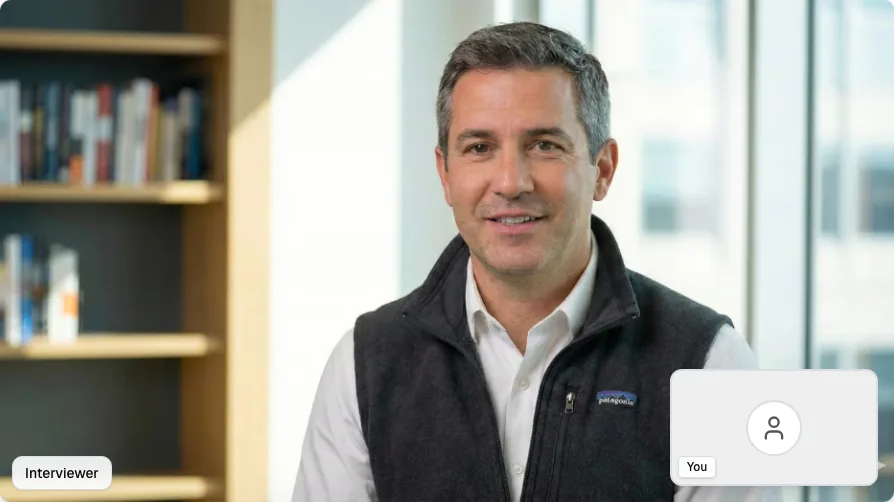
Based on BCG's published candidate FAQ and consistent prep-source reports, the format is well documented. You receive a Spark Hire link by email, open it in a browser, work through a short setup and tutorial, then record answers to a small set of pre-set questions.
Two facts are firm-specific. First, this is explicitly not a case interview. BCG asks about your experiences and goals to get to know you, not to test structuring or math on camera. Second, it is one element of a larger process, so a strong video does not replace case readiness for the skill interview, case interview, and team interview that follow. If you are applying to analytics, AI, or product-heavy roles, also check BCG Gamma and BCG X interview prep, because the screening mix can differ for technical tracks.
Everything else is invitation-specific. Office, role, and recruiting cycle can change the timer, the number of prompts, and whether practice questions are offered, so reading your own invite carefully is the most useful first step.
Does BCG use HireVue?
No. BCG runs its one-way video screen on Spark Hire, not HireVue. The two platforms look similar from the candidate side: recorded answers, no live interviewer, a countdown timer. That resemblance is why "BCG HireVue" shows up in search suggestions, but your invite link, timer rules, and retake behavior all follow Spark Hire. If a different employer sent you to HireVue, read the HireVue interview guide for consulting instead. If you want timed mock practice for any one-way screen, HireVue Practice runs scored rehearsals that train the answer, not the camera interface.
What should you verify in your BCG invite?
Read the invitation and the Spark Hire instructions like an operating document, because the prep plan changes with what the platform allows.
Log the deadline, platform, and recruiter notes in the consulting application tracker so a screening step does not slip. One safeguard from prep sources: start the interview several hours before the deadline, not minutes before, so a technical problem does not cost you the round.
What questions does BCG ask in the video interview?
These are practice themes, not leaked BCG prompts. They reflect the categories BCG and prep sources consistently describe, clustered into motivation, resume evidence, and behavioral fit. Build fluency across all three rather than memorizing a script for a guessed prompt.
Motivation and fit:
- Why BCG, and why consulting?
- What type of problem do you want to solve at BCG?
- What characteristics make you suited to consulting?
Resume and impact:
- Walk me through your resume. If this runs long, tighten the arc with the tell me about yourself consulting interview guide.
- Tell me about a project where you created real impact.
- What achievement best shows how you work?
Behavioral and judgment:
- Tell me about a time you led a team through a challenging situation.
- Tell me about a personal or professional failure and how you handled it.
- Tell me about feedback you received and how it changed your behavior.
- How would you handle a client who is resistant to a proposed change?
For sharper leadership, conflict, and feedback stories, the behavioral interview consulting guide helps you choose which examples to bring. Then rehearse the answers live before you press record, so you choose real stories rather than improvise.
How should you structure a recorded answer?
A recorded answer has to land without anyone steering it, so signposting matters more than in a live conversation. A reliable structure is point first, then situation, action, and result, then a short link back to BCG, kept inside the 2-3 minute window as a focused 60-90 second story with a clean opening and closing line. Use the rubric below after recording yourself, then fix the weakest signal first.
A worked Why BCG answer, weak then strong
The same answer at three quality levels shows what the rubric rewards.
Weak (about 8 seconds): "BCG has strong clients and great culture, and I want to make an impact in consulting." This fails every signal except brevity. It could be any candidate at any firm.
Better (about 25 seconds): "I want to join BCG because I am interested in strategy and I work well in teams. I have led group projects and I am good at solving problems, so consulting feels like a natural fit." This adds structure but names no real situation and no BCG-specific reason, so a recruiter cannot picture you doing the work.
Strong (about 70 seconds, point first with evidence): "I am drawn to BCG because my best work has been turning messy, unstructured questions into a clear recommendation, which is exactly what BCG's case teams do. In a student consulting project for a local retailer, the client could not explain why a new product line had stalled. I led the customer interview workstream, ran 12 interviews in two weeks, and found the problem was not the product but a confusing onboarding flow and unclear pricing. I built that into a two-slide recommendation, the team reprioritized the final deck around pricing and onboarding, and the client adopted both changes. Taking ambiguity and ending on a concrete recommendation is the type of client problem I want to keep developing at BCG, which is why I am applying here specifically."
The strong version opens with the point, names a real situation with a number (12 interviews in two weeks), makes the personal role explicit, shows a result (the client adopted both changes), and ties it to a BCG-specific reason, while still sounding like a person rather than a script.
Endings are where recorded answers most often fail, because no interviewer catches a trailing close. A one-way behavioral rep trains crisp closing lines. Land the takeaway instead of letting the answer fade out.
What mistakes make recorded answers weaker?
These are the failure patterns prep sources flag most often, each with a direct fix.
-
Reading a full script. A word-for-word script flattens delivery and buries your real experience. Short cue words near the camera are fine if the platform allows them, but the answer should sound spoken, not read.
-
Generic Why BCG. Prestige and rankings signal nothing. Tie BCG to a specific type of problem, a real project, and a skill you want to build, as in the strong example above.
-
AI-written wording that is not yours. BCG's AI application guidance says AI can support preparation but should not replace your personal insights, voice, experience, or authenticity. Use AI to pressure-test clarity, not to invent a personality the recruiter will not see again in the live rounds.
-
Rambling past the point. With no interviewer to redirect you, a shapeless answer reads as poor communication. If you would need a live interviewer to rescue the answer, it is not ready for a one-way format.
-
Treating the setup as minor. Test camera, microphone, internet, lighting, and upload access before you record. Use a quiet, well-lit space with a neutral background, look at the lens rather than the screen, and start well before the deadline.
After you fix these, move into the case interview prep guide, because the video screen is only one piece of the BCG path.
How should you practice before submitting?
Silent reading does not train the skill a recorded screen tests: speaking clearly under a timer. Rehearse in platform-like conditions, then review the playback twice, once for content and once for delivery.
Do the rehearsal with camera on, notes limited to cue words, and no pausing mid-answer. If a take has a clear point, real evidence, and a short takeaway, keep it; if it sounds impressive but empty, rewrite it. UC Berkeley career guidance supports the same loop: mock interviews and recorded-answer review.
What should you do after the video screen?
After submitting, write a quick debrief before memory fades: which prompts came up, which answer was strongest, which sounded least specific, and any recruiter follow-up. Then convert the same stories into live fit answers, because live interviewers probe, so keep your proof points ready to defend.
Do not wait for the result before starting case work. BCG's case interview preparation page says cases ask you to structure an approach, analyze data, make quick calculations, and show sound reasoning. Start with the case interview prep guide, and if quant or exhibits are weak, add case interview math practice and the case interview examples guide. Pressure-test the behavioral side with a live voice rehearsal. Road to Offer does not reproduce the camera interface; it helps you sharpen the answer you will record there.
Other BCG online screening steps may appear in the same cycle, including the BCG Pymetrics behavioral traits assessment, the BCG online case Casey, and the BCG Consulting Career Assessment; the consulting aptitude test overview maps how these relate to McKinsey and Bain online gates. If you are switching fields, the case interview prep for career changers guide helps you frame non-traditional stories for the same prompts.
Sources
- Boston Consulting Group, Consulting Interview Process (checked June 18, 2026)
- Boston Consulting Group, Case Study Interview Preparation (checked June 18, 2026)
- Boston Consulting Group, How to Use AI in Your Application Process (checked June 18, 2026)
- Boston Consulting Group, One-Way Video Interview FAQs (PDF) (checked June 18, 2026)
- Spark Hire, Intro to One-Way Video Interviews for Candidates (checked June 18, 2026)
- StrategyCase, BCG One-Way Video Interview (checked June 18, 2026)
- Management Consulted, BCG One-Way Interview (checked June 18, 2026)
- UC Berkeley Career Engagement, Interview Preparation (checked June 18, 2026)
Frequently asked questions
Resources and related guides
- Practice real BCG casesPractice
- Browse all free resourcesResource hub
- BCG Gamma: what changed, BCG X roles, and interview prepFirm Specific · May 22, 2026
- BCG Internship Guide to Consulting Experience and SuccessFirm Specific · May 20, 2026
- Accenture HireVue: No-Retake Elimination Round and How to Pass (2026)Firm Specific · Sep 11, 2026
- PwC Assessment Test 2026: Formats, Questions & How to PrepareFirm Specific · May 30, 2026