
BCG Fit and Behavioral Interview Guide: The 3 Whys, Question Buckets & Sample Answers (2026)
A BCG-specific fit and behavioral interview guide: the 3 Whys, the real question buckets, STAR vs PARADE, a portable story bank, and a 4 to 6 week prep plan with worked answers.
Your first interview question
Get your full coached feedback now. Continue the interview free after sign-up.

On this page
The BCG fit and behavioral interview in 2026 is short, often only 10 to 15 minutes per interview according to Leland, yet it carries weight far beyond its length. This is the part of the process where BCG decides whether a partner could trust you in front of a client tomorrow morning. The questions feel conversational and far less scripted than McKinsey's Personal Experience Interview, and that informality is exactly what trips candidates up. There is no rigid template to memorize, so a generic, over-rehearsed answer stands out for the wrong reasons. BCG is reading for leadership, clear communication, and maturity under pressure, and it does so while each interviewer sees roughly five candidates a day, per My Consulting Coach. This guide breaks down the 3 Whys, the real question buckets, the story structure BCG rewards, and a focused four to six week prep plan so your fit answers land as sharp as your casing.
What the BCG Fit Interview Actually Is
The fit interview is BCG's trust test. Cases prove you can structure a problem and run the math. Fit proves you can sit on a client team, communicate clearly, handle ambiguity without unraveling, and behave like an adult under pressure. Partners are not hiring a calculator. They are hiring someone they will put in a room with a CFO.
What makes BCG distinctive is how unstandardized it feels. McKinsey runs the Personal Experience Interview as a structured deep-dive, roughly 10 minutes per dimension, drilling relentlessly into a single story until they hit the core of your judgment. BCG is looser. The conversation can wander, the interviewer may riff off your resume, and the same trait can be probed through two or three different questions. That casualness is a trap: candidates relax, ramble, and forget that every anecdote is still being scored.
The 3 Whys, Decoded
Almost every BCG fit conversation runs through three core questions. Nail these and the rest of the interview tends to flow.
Why You (the resume walk-through)
This is the "tell me about yourself" or "walk me through your resume" opener. Keep it to 1 to 2 minutes, the range PrepLounge contributors recommend for the BCG fit interview pitch. Do not recite your CV line by line. Tell a short narrative with a thread: where you started, two or three defining moments that built relevant skills, and why that path leads naturally to BCG now. End on forward motion, not a list.
Why Consulting (2 to 3 structured reasons)
PrepLounge advises organizing this into 2 to 3 structured points rather than a vague "I like solving problems." Strong reasons sound like: steep learning curve across industries, working with senior decision-makers early, and exposure to a variety of problem types before specializing. Make each point concrete with a hint of personal evidence.
Why BCG (genuine and tailored)
This is where candidates lose points fastest. A "Why BCG" answer that could be pasted into a McKinsey or Bain application is a dead giveaway that you have not done the work. Anchor it to something specific: a practice area, a piece of BCG thought leadership you actually read, the firm's approach to a sector you care about, or a conversation with a BCGer. Our Why BCG guide goes deeper on building an answer that does not sound recycled.
The Behavioral Question Buckets BCG Actually Drills
BCG's questions cluster into a handful of repeatable buckets. ConsultingCase101 compiles a bank of 200 BCG behavioral and fit questions grouped into exactly these kinds of themes. You do not need 200 answers. You need 6 to 8 strong stories that cover these buckets. Here are the buckets with real example prompts.
Notice the verbatim phrasing. Interviewers really do open with lines like "Tell me about a time you led a team through a challenge," so practicing against the exact wording matters. The fit portion sits inside a longer interview: RocketBlocks describes interviewers spending about 15 minutes on behavioral questions, then a 35 to 45 minute case.
STAR vs PARADE: Use the One With Reflection
Most candidates know STAR (Situation, Task, Action, Result). It is fine, but it stops at the result, which is where BCG answers go flat. PARADE adds the two things interviewers actually probe for: your reasoning and your reflection.
- STAR: Situation, Task, Action, Result.
- PARADE: Problem, Anticipated consequence, Role, Action, Decision-making rationale, End result (plus an explicit lessons-learned beat at the close).
The difference is the "decision-making rationale" and the closing reflection. BCG is not just checking that you did something. They are checking how you thought about it and what you took away. A list of events says "this happened." A PARADE answer says "this happened, here is why I chose this path over the alternatives, and here is what I would do differently now."
Build a Portable Story Bank
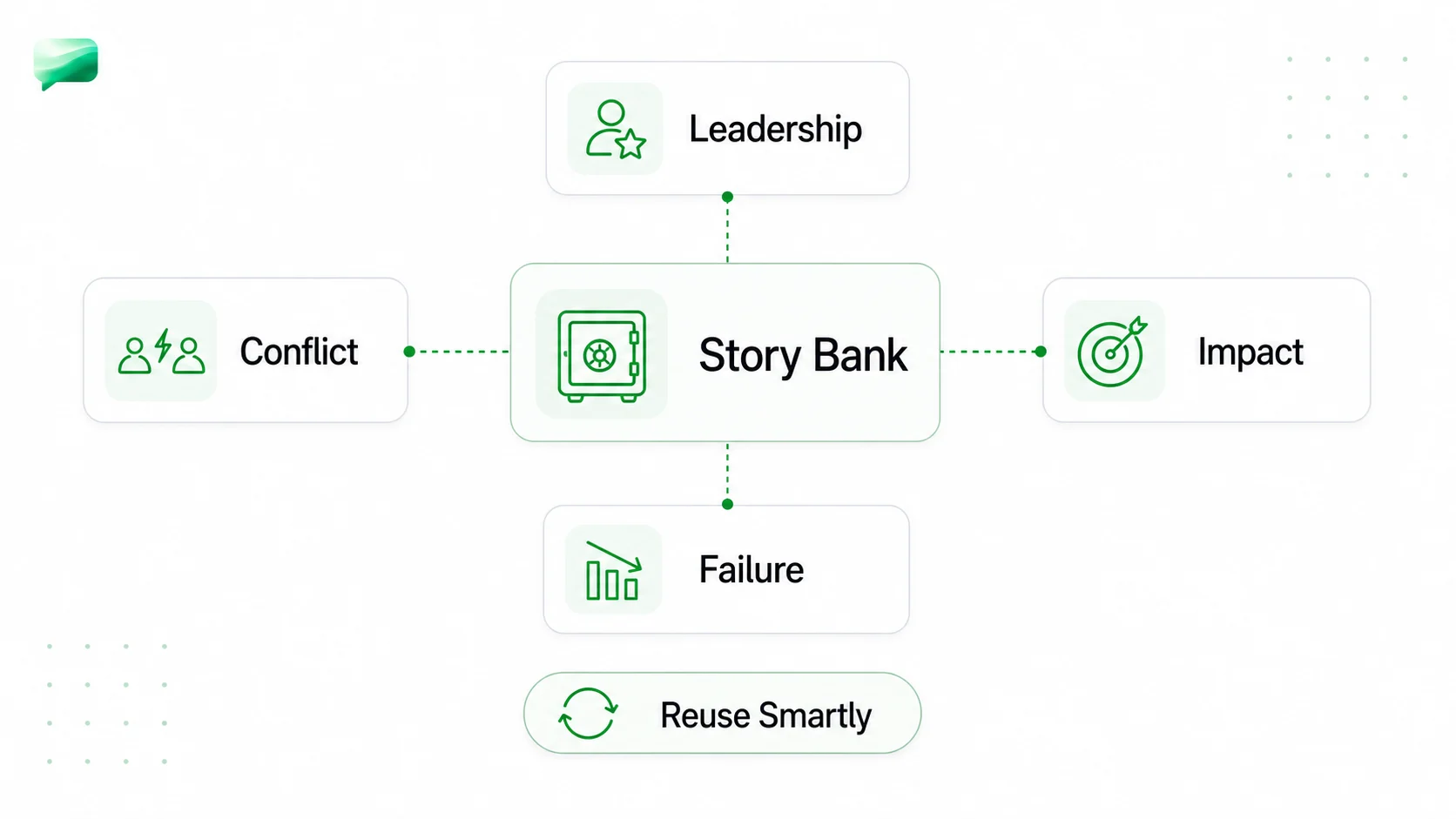
You cannot prepare a unique story for 200 questions. You prepare a small set of versatile stories and re-aim them. Leland recommends 6 to 8 versatile behavioral stories, drawn from work, school, and extracurriculars, ideally from the last 2 to 3 years so the details are fresh and the stakes feel real. My Consulting Coach adds a sharp tactical note: prepare at least two stories per quality being tested, because interviewers often ask for a second example of the same trait once you have given your first.
The unlock is a matrix. Each story should map to a primary trait and one or two secondary traits, so a single experience can answer three different prompts.
Plan to spend about 5 to 10 minutes telling each story in full, then practice a 90-second compressed version for when the interviewer wants you to move faster.
No Case Without Fit
A critical and often-missed point: fit does not stay in the fit round. It surfaces inside the case. Mid-analysis, a BCG interviewer may pause and ask how your team reacted to a decision, how you handled a stakeholder who pushed back, or how you would manage a colleague who disagreed with your recommendation. These are behavioral probes dressed up as case follow-ups.
The mistake is mentally switching off your fit brain once the case begins. Stay alert for questions about team dynamics, other people's reactions, and conflict, even when you are deep in the numbers. A clean structure with a robotic, low-EQ answer to "how did your team feel about that?" can undo a strong case. The same maturity you bring to the dedicated fit round needs to be available the entire interview.
Across a typical BCG process, each round includes 1 to 2 case interviews plus a behavioral component, with roughly 4 to 6 cases total across two rounds, which means you face these embedded fit moments many times over. For the casing mechanics that surround them, the BCG case interview guide is the companion to this one.
What BCG Evaluates Beneath the Questions
Strip away the specific prompts and BCG is scoring four things:
- Leadership and influence. Did you move people, or just describe a task you completed? They want to see you change an outcome through other people.
- An achieving, go-beyond mindset. Stories that show you doing the minimum bore them. They reward candidates who set a higher bar than required and reached it.
- Structured problem-solving. Even in a story, your answer should have a clear arc. A rambling anecdote signals a rambling mind.
- Authenticity and specific personal impact. This is the big one. BCG wants "I," not "we." If every sentence is "we decided" and "the team did," the interviewer cannot find you in the story.
How Candidates Blow the Fit Round
The failure modes are predictable, which makes them easy to design out of your prep:
- Hiding behind "we." Covered above, and it is the most common. Quantify your individual impact.
- Generic "Why BCG" answers. A line that fits any firm reads as zero research. Make it BCG-specific or cut it.
- No quantified impact. "It went well" is not a result. "Revenue rose 12 percent" or "we cut turnaround from five days to two" is.
- Rambling past the time box. A five-minute answer to a one-minute question signals poor communication, the exact opposite of what consultants are paid for.
- Zero reflection. Ending on the result and stopping leaves the most important point unsaid. Always close with what you learned or would do differently.
Turn the Interview Around: Smart Questions and Your Spike
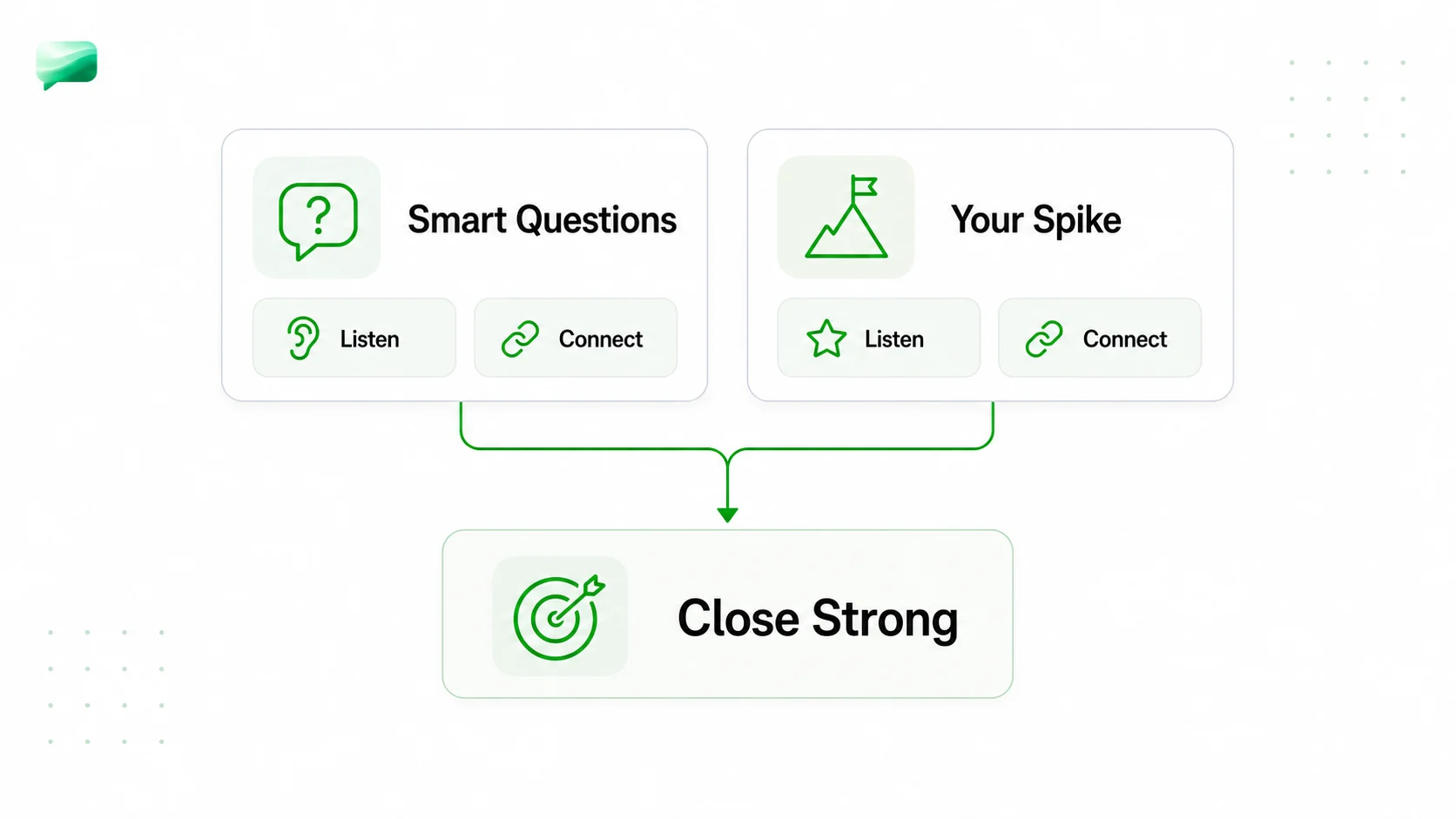
A fit interview is a two-way read. The questions you ask at the end signal how seriously you take the firm. Skip the ones answered on the careers page. Ask about the interviewer's own experience: a project that changed how they think, how staffing actually works for someone in your cohort, or what separates the analysts who thrive from those who struggle. Specific, curious questions leave a final impression of maturity.
Equally important is knowing your spike: the one or two dimensions where you clearly stand out. Maybe it is quantitative horsepower, maybe it is client presence, maybe it is a rare industry background. Identify it before the interview and make sure at least one story showcases it unmistakably. Given that an interviewer sees roughly five candidates a day, being memorable on a specific dimension is what survives the debrief.
How to Prepare: A 4 to 6 Week Plan
Leland frames the overall process prep as 4 to 6 weeks at 1 to 2 hours per day, and RocketBlocks notes the behavioral-specific work can be compressed into 2 to 3 weeks of focused effort. Front-load the highest-probability questions and rehearse out loud, not silently.
Execution checklist
Week 1: Draft the 3 Whys and your story bank. Write your why-you pitch (1 to 2 minutes), why-consulting (2 to 3 points), and why-BCG. List 6 to 8 stories from the last 2 to 3 years and map each to a primary plus secondary traits.
Week 2: Convert stories to PARADE and add reflection. Rewrite each story in PARADE form with explicit decision rationale and a lessons-learned close. Quantify every result. Prepare a 90-second compressed version of each.
Week 3: Drill the buckets out loud. Practice the leadership, failure, conflict, influence, ambiguity, and ownership buckets against verbatim prompts. Record yourself and cut rambling. Prepare a second story per high-probability trait.
Weeks 4 to 5: Mock interviews with feedback. Run full mocks that blend fit and case, including embedded fit probes inside the case. Use a partner or AI feedback to catch we-language, missing reflection, and time-box overruns.
Week 6: Polish, questions, and your spike. Tighten your weakest two answers, prepare 3 to 4 sharp questions for the interviewer, and confirm at least one story showcases your spike unmistakably.
If you are recruiting at McKinsey in the same cycle, study how the structured PEI differs from BCG's looser style in the McKinsey PEI guide, then deliberately keep your BCG answers more conversational. The two formats reward different delivery.
The Bottom Line
The BCG fit and behavioral interview is short, casual, and high-stakes all at once. Win it by treating the relaxed tone as a composure test, mastering the 3 Whys, building 6 to 8 versatile PARADE stories with real reflection, speaking in "I" rather than "we," and staying alert to fit probes that surface inside the case. Prepare the highest-probability questions first, rehearse out loud, and identify the spike that makes you memorable in a day full of candidates.
Sources (checked June 26, 2026)
- Leland, Breaking down BCG interviews
- RocketBlocks, BCG interview prep plan
- My Consulting Coach, Case interview fit interview
- PrepLounge, BCG fit interview forum thread
- ConsultingCase101, 200 BCG behavioral and fit questions
Frequently asked questions
Resources and related guides
- Practice a real behavioral interviewPractice
- Browse all free resourcesResource hub
- Bain Fit and Behavioral Interview Guide: Questions, Dimensions & Model Answers (2026)Firm Specific · Jun 28, 2026
- BCG vs Bain: 10 Real Differences (2026 Guide)Firm Specific · May 1, 2026
- McKinsey vs BCG: 10 Real Differences (2026 Guide)Firm Specific · May 1, 2026
- What Does a Principal at BCG Do? Role, Salary, PathFirm Specific · May 1, 2026