
Charles River Associates Summer Internship 2027: Pay, Dates
Charles River Associates internships for Summer 2027 are open now to students graduating in December 2027 or Summer 2028, and each Charles River Associates summer internship is reviewed on a rolling basis, so early applicants are read first. A Charles River Associates intern joins one practice, from antitrust and finance to cyber forensics, and the Charles River summer internship in the UK adds life sciences roles in Cambridge and London.
How do you get a Charles River Associates internship?
You apply to a practice-specific posting with up to two practice and office preferences, clear a written application (resume, cover letter, transcript and, for economics, a writing sample), pass experience and case interviews, then a final round, and turn the 8 to 10 week summer into a full-time offer. Click a stage to see what CRA looks for and the practice that matches it, or jump to that part of this guide.
From application to Charles River Associates offer
Apply before seats fill
Pick up to two practices and offices. Review is rolling until roles fill, so an early application is read before seats go.
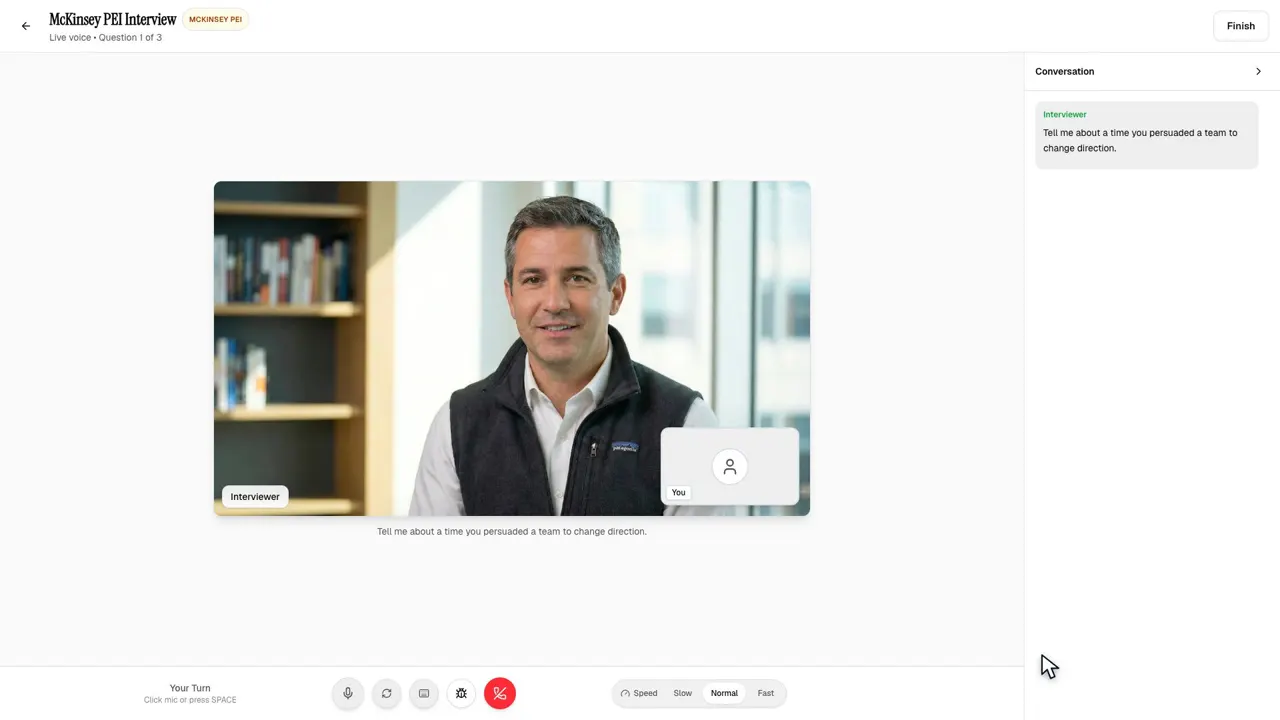


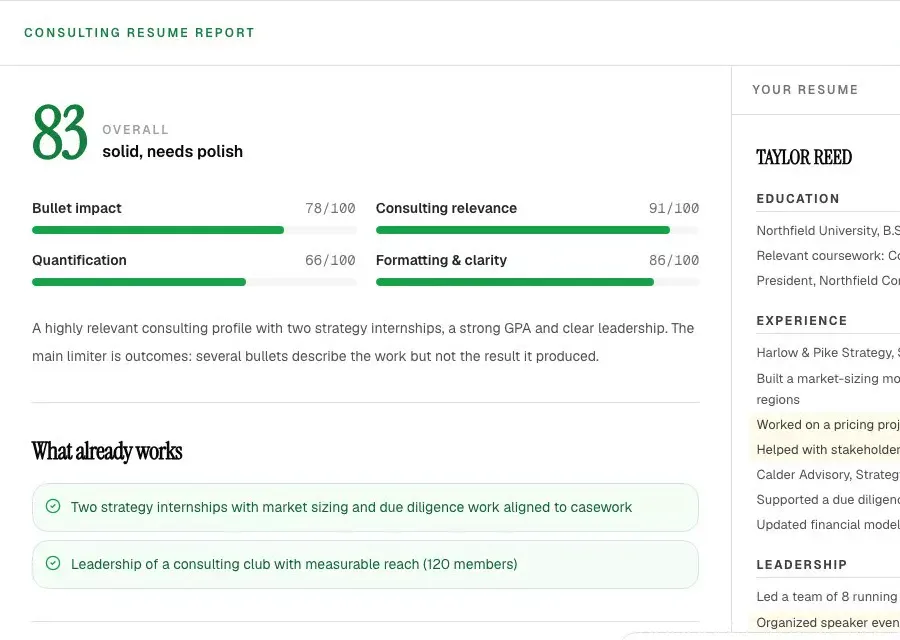
When does the Charles River Associates summer internship open?
It is open now: CRA posted its US Summer 2027 internships on August 28, 2026, the finance role began resume review on October 15, and review is rolling until positions are filled. These are the summer roles live on CRA's job board on November 3, 2026; the US postings are for students graduating in December 2027 or Summer 2028:
RollingLate-fall review
Open nowEconomics Consulting Analyst/Associate Intern
Quantitative majors graduating December 2027 or Summer 2028
Oct 15Review began
Open nowAccounting/Business/Finance Consulting Intern
Accounting, business and finance majors · rolling review
RollingFall review
Open nowCyber and Forensic Technology Consulting Intern
Computer science, cybersecurity and information systems majors (non-MBA)
Oct 5Posted
Open nowAntitrust and Competition Economics Intern, London
Economics undergraduates graduating December 2027 to August 2028
Nov 16Interviews from
Open nowLife Sciences Strategy and Policy Intern, UK
Cambridge and London · June 28 to September 3, 2027
TBANot posted
Not postedSummer 2028 internships
Students graduating in 2029
Checked on CRA's job board, November 3, 2026.
Because review is rolling, applying in November beats applying in January, and the UK life sciences postings hand out video interview slots first come, first served. A free application tracker keeps each requisition and its status in one place. School career sites can carry their own dates: Harvard's listing for the finance intern role says recruitment began September 3, 2026 and the listing expires December 1, 2026. CRA's campus FAQ adds that a few positions are reviewed only after a deadline, and the posting says which applies. The consulting application deadlines guide lines CRA up with other firms.
Which CRA internship should you apply to?
Apply to the posting that matches your major, then name your practice and office in the cover letter. CRA's FAQ lets you list up to two geographic and practice preferences, and a candidate several practices want may get more than one interview.
The economics posting wants a quantitative major (economics, business, statistics, mathematics, computer science), the ability to explain economic, financial or accounting concepts, and experience in Excel, Stata, Python, R, SQL or SAS. An honors thesis, research apprenticeship or research seminar is "highly desired." The application has four parts: a resume, a cover letter naming your practice and office interest, an unofficial transcript and a writing sample you wrote alone that includes your commentary on a quantitative analysis. China Competition projects add Mandarin interviews in the final round.
In the UK, the Life Sciences practice hires Strategy and Policy interns in Cambridge and London from penultimate- and final-year Bachelor's, Master's or PhD students with at least a 2:1 in biological sciences, economics, policy or another STEM subject. In the US, final-year students apply to full-time roles instead of internships, per CRA's FAQ. If you are choosing between economic consulting firms, the Cornerstone Research, Analysis Group and Compass Lexecon guides cover the closest peers, and Charles River Associates consulting explains how CRA's practices are organized.
What does the CRA internship interview look like?
CRA interviews in four formats (experience questions, cases with guesstimates, timed tests and group interviews) across a first round and, in economics, a final round. The formats are listed on CRA's interview preparation page; its FAQ confirms a first-round interview, the economics posting refers to a final round, and CRA does not publish how many rounds each role has.
Experience
behavioral
- Past jobs, leadership and studies
- Why you are interested in CRA
Often phrased "Tell me about a time when…"
Case
guesstimates
- No single correct answer
- Handle limited information, choose data, explain your logic
Show your math
Tests and group
some roles
- Timed numeracy, writing and critical-thinking tests
- Group interview: how you speak to and listen to others
Experience interview. Questions on past jobs, leadership and studies, often phrased "Tell me about a time when you have…", plus why you are interested in CRA. The UK life sciences postings go further and ask the one-page cover letter to answer three questions: why life sciences consulting and why CRA, a time you made a data-guided decision, and the experience on your resume you are proudest of. The behavioral interview guide covers the format, and you can rehearse a CRA interview with live follow-up questions.
Case interview. CRA says there is no single correct answer, guesstimates are common, and interviewers watch how you handle limited information, choose data and explain your logic, so be ready to show your math. If you have never run a case, learn the method first:
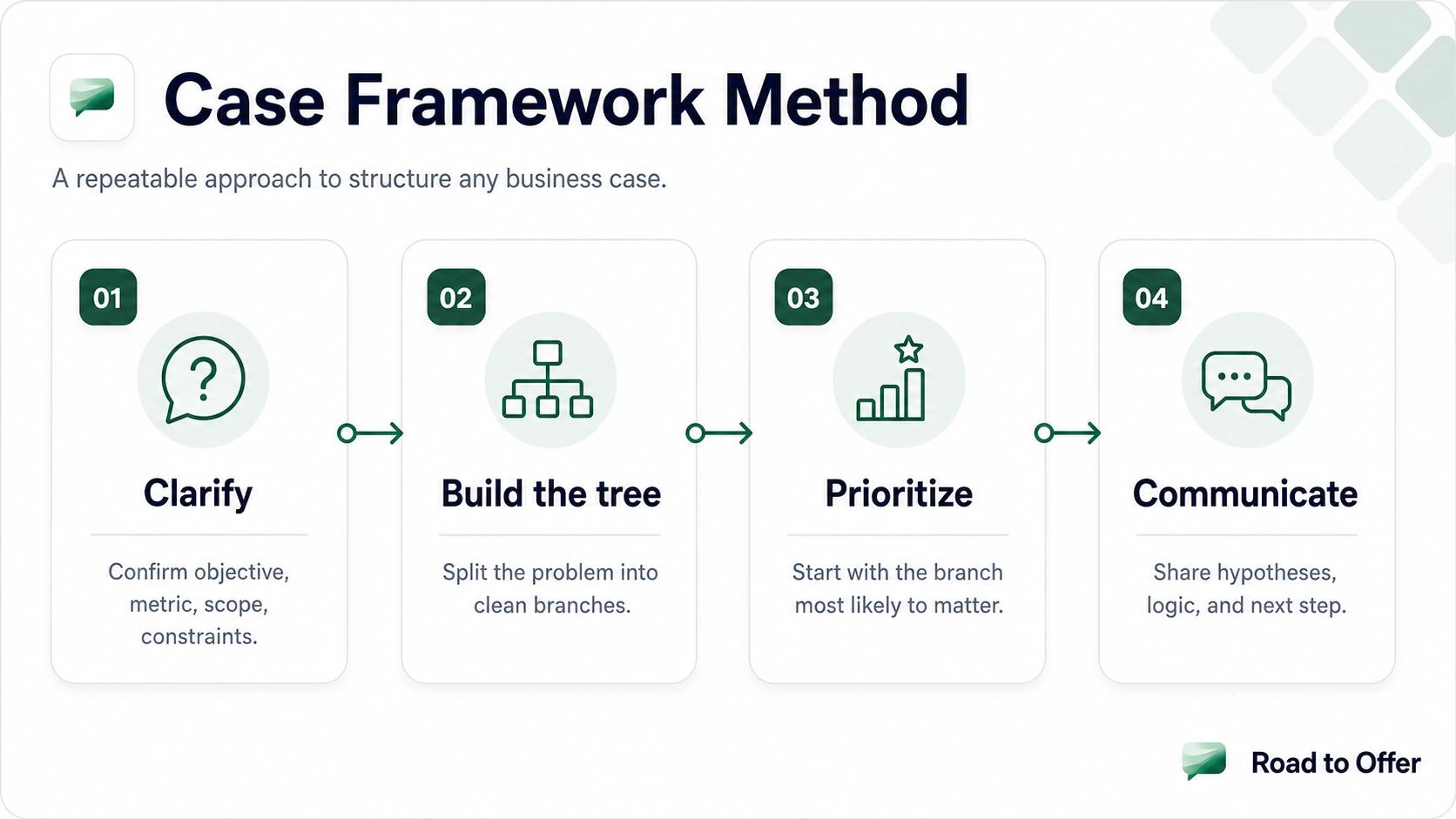
Learn the case method
One dense lesson, each step linked to the drill that trains it.
For a rep, Craft Beverage Acquisition is original practice about a craft beer leader weighing an acquisition to diversify, not CRA material:

Practice an acquisition case for CRA
Consumer GoodsMedium
The market sizing questions guide covers guesstimates, and the CRA case interview guide works a merger case with concentration math.
Assessments. Timed tests of numeracy, writing and critical thinking. The numerical reasoning test guide and the written case interview guide cover both halves.
Group interview. Interviewers watch how you speak to and listen to others; the group case interview guide explains what earns credit.
CRA's postings also set an AI expectation: the firm uses technology in recruiting but expects candidates "to invest corresponding human effort" in their materials and interviews. Write the cover letter and writing sample yourself.
How should you prepare for a CRA internship?
Give it four weeks, in the order CRA screens you, starting with the written application.
What matters most at CRA is economic reasoning you can explain. The postings ask for interns who can explain economic, financial and accounting concepts, and CRA's case guidance rewards showing the math more than reaching a perfect number. Pick one microeconomics idea your practice uses (market definition for antitrust, discounted cash flow for finance) and be able to explain it in plain words.
How much do Charles River Associates interns get paid?
CRA pays US interns $30 to $37.50 an hour, about $1,200 to $1,500 a week at 40 hours (our arithmetic). That is the good-faith base wage range on its Summer 2027 economics, finance and cyber intern postings, for its offices in pay-transparency jurisdictions (California, New York City and Washington DC, depending on the role). Total compensation can also include benefits and bonus, the postings say.
The 2027-graduate full-time Economics Consulting Analyst/Associate posting lists a base salary range of $92,500 to $100,000, which is what a return offer leads to. The Charles River Associates salary guide covers pay after that first year.
How hard is it to get a CRA internship?
CRA does not publish applicant counts or an acceptance rate; Vault calls it "a highly competitive program." Vault's CRA internship profile puts the class at 51 to 100 interns across its offices, and ranks it #19 among consulting internships in the 2027 Vault rankings.
The concrete difficulty is the application itself. It asks for more than a resume: a cover letter, a transcript and a writing sample, and the economics posting singles out research experience (an honors thesis or research apprenticeship is "highly desired") and statistical software skills. On those terms, a candidate with Stata or Python coursework and a research paper is better placed than one with a polished case-club resume and no quantitative work.
What do CRA interns actually do?
CRA interns work alongside senior colleagues on live client projects within one practice for 8 to 10 weeks. CRA says the program "mirrors the analyst experience." The economics posting lists the tasks: economic and industry research on a case's issues, financial and economic analysis or valuation models, programming and regression analysis in Excel, Stata, R, Python, SQL or SAS, summarizing analyst reports and client documents, helping produce expert reports and presentations, and quality-control review of the analysis.
Most of that work supports litigation and regulatory matters, so the client is often a law firm and the output is an expert report rather than a strategy deck. On training, the postings cite CRA's commitment to 100 hours a year, starting with research and analysis skills, and CRA's intern program page lists Tech Lab workshops, intern development sessions and a development team of a senior-staff mentor and an experienced peer who meet with you regularly. Expect the office most days: the postings ask staff to spend 3 to 4 days a week there on average. For how this differs from strategy consulting, see generalist vs specialist consultant roles.
Do CRA interns get return offers?
Yes, successful ones: CRA's US postings state that "successful interns will be offered a full-time position following graduation." CRA publishes no conversion rate, so treat the offer as earned on the summer's work.
The economics posting names what the work is judged on: accurate, high-quality analysis, attention to detail, initiative and time management. Run your own quality checks before handing work up, ask your senior-staff mentor for feedback at the midpoint, and own one analysis from data to exhibit. The consulting internship return offer guide covers what reviewers weigh across firms.
To compare CRA with other specialist summers, read the AlixPartners internship and Huron internship guides, or the full best consulting internships list.
Three ways to practice for Charles River Associates
- Start a free case
Run a full case. 92 cases in voice or guided text, scored on seven dimensions.
- Try a free drill
Drill one skill. 550+ drills across 6 skill types.
- Find your test
Practice your firm's test. Solve, Casey, CCA, SOVA and TestGorilla, each free to try.



Sources
- CRA: Economics Consulting Analyst/Associate Intern (Summer 2027), job 8120300 (posted August 28, 2026; practices, offices, tasks, application materials, rolling review, $30 to $37.50 an hour, final round, AI expectation, 100 training hours; checked November 3, 2026)
- CRA: Accounting/Business/Finance Consulting Analyst/Associate Intern (Summer 2027), job 8160288 (resume review from October 15, pay range, office days; checked November 3, 2026)
- CRA: Cyber and Forensic Technology Consulting Analyst/Associate Intern (Summer 2027), job 8128811 (checked November 2, 2026)
- CRA: Intern, Antitrust and Competition Economics, London, Summer 2027, job 8186451 (checked November 2, 2026)
- CRA: Analyst Intern, Labor and Employment, Winter/Spring 2027, job 8243522 (hours and dates; checked November 2, 2026)
- CRA: Intern, Strategy Consulting (Life Sciences), Summer 2027, UK, job 8199212 (rolling review from October 2, video interviews from November 16, June 28 to September 3, 2027, eligibility, cover letter questions; checked November 3, 2026)
- CRA: Intern, Policy Consulting (Life Sciences), Summer 2027, UK, job 8249052 (posted October 2, 2026; same program terms; checked November 3, 2026)
- CRA: careers job board and campus board (intern postings outside the US, including Brussels, Munich and the Toronto Fleming placement; checked November 3, 2026)
- CRA: Economics Consulting Analyst/Associate, 2027 graduates, job 7894191 (full-time base $92,500 to $100,000; checked November 2, 2026)
- CRA: Campus interview and application FAQs (preferences, rolling review, sponsorship, final-year students; checked November 2, 2026)
- CRA: Prepare to apply and interview (interview formats; checked November 2, 2026)
- CRA: Intern program (training and mentoring; checked November 2, 2026)
- Harvard Career Services: CRA 2028 BA/MA Acct./Business/Finance Consulting Intern (recruitment start and listing expiry; checked November 2, 2026)
- Vault: Charles River Associates internship profile (51 to 100 interns, preferred GPA band, 2027 ranking #19; checked November 2, 2026)
Frequently asked questions
Resources and related guides
- Consulting application trackerPractice
- Browse all free resourcesResource hub
- AlixPartners Internships 2027: MBA, Timeline, and PayRecruiting · Sep 11, 2026
- Alvarez and Marsal Internship 2027: MBA, Salary, DeadlinesRecruiting · Sep 11, 2026
- Huron Internships 2027: Consulting Pay, Dates, InterviewsRecruiting · Sep 11, 2026
- Simon-Kucher Internship 2027: Salary, Timeline, InterviewsRecruiting · Sep 11, 2026