
Case in Point Book Review (2026): 12th Edition, PDF & Alternatives
Case in Point by Marc Cosentino, reviewed for 2026: the 12th-edition verdict, what actually changed, whether a legal PDF exists, and stronger alternatives for MBB prep.

McKinseyRace to the Bottom Airline ProfitabilityProfitability · Medium
Start a free case interview
Hear the case, say or type your answer, get your score.

Don't know how to case yet? Learn how to case
On this page
Case in Point is a case interview preparation book by Marc Cosentino, first published in 1999 and currently in its 12th edition (2023). It is the best-selling case interview guide worldwide, used by candidates preparing for McKinsey, BCG, Bain, and other consulting firms. The book is genuinely useful for orientation, market sizing, and mental math, but its central methodology (the Ivy Case System) draws criticism for promoting rote framework application that MBB interviewers are trained to spot. Based on candidate practice on Road to Offer's platform, the candidates who get offers treat it as a launchpad, not a system. Here is what the book covers, where it works, and what to use alongside it in 2026.
The short verdict: worth reading once, early, for orientation. It is not a system to follow into an MBB interview, and the sections below explain exactly where it helps and where it costs you.

Profitability · medium
Practice a real case interview
Matched to this article: a live retail profitability case with an AI interviewer. Free, scored on every step.
What is Case in Point?
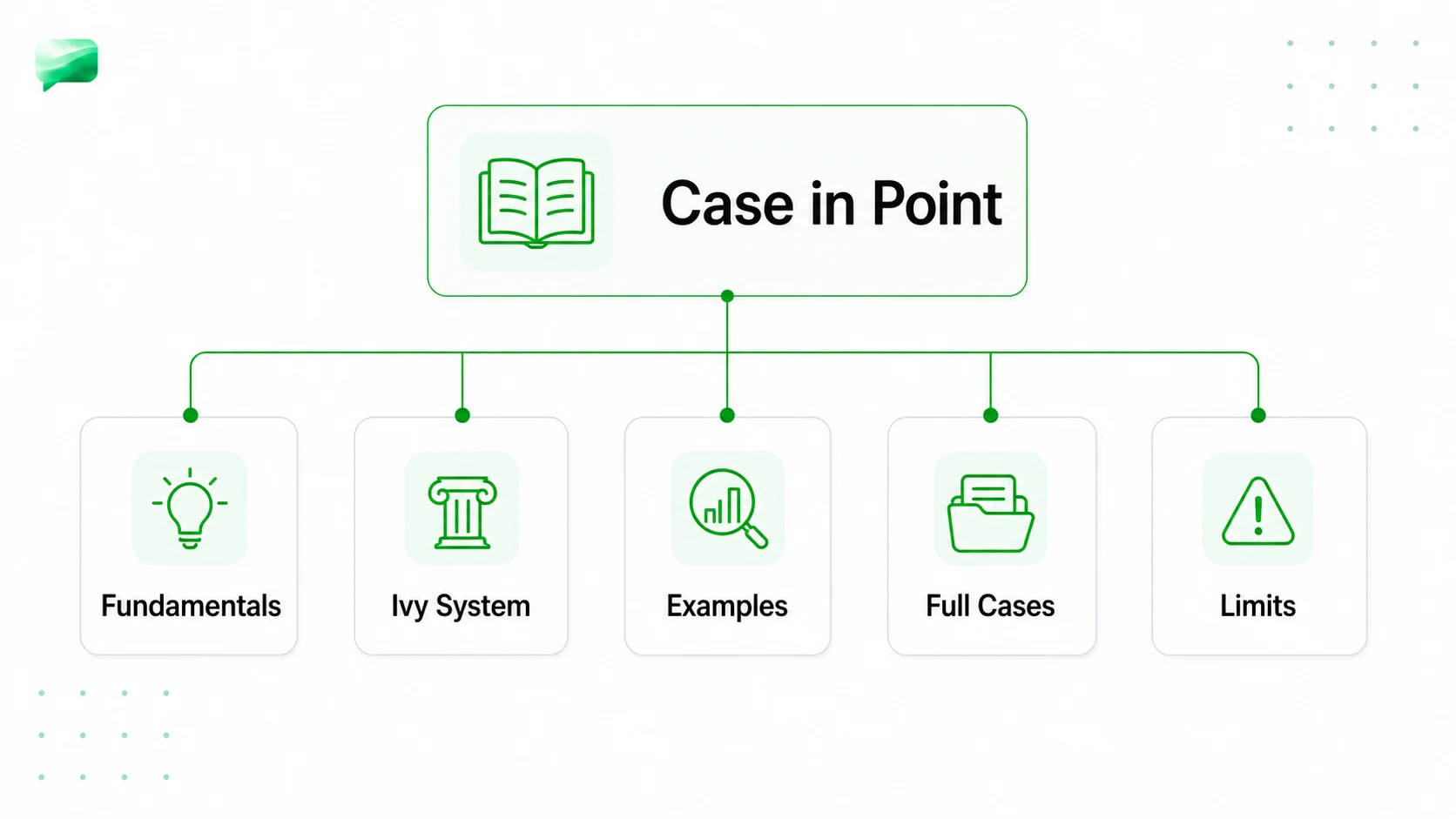
Case in Point is a 300+ page case interview prep book. Marc Cosentino self-published the first edition in 1999 while at Harvard's Office of Career Services. The 12th edition (2023) is the most substantively updated version since 2010 (Audible).
The book is structured in four blocks: case interview fundamentals (first 100 pages), the Ivy Case System (Cosentino's signature methodology), worked examples in market sizing and mental math, and 40 full strategy cases with answer guidance.
Cosentino reports coaching 150,000+ students over three decades, which gives the book unusual reach: most MBB-bound candidates encounter it within their first week of prep. The financial upside driving that demand is documented in the 2026 Consulting Salary Report. For how it fits among other resources, see our case interview books roundup.
Who wrote Case in Point and when?
Marc Cosentino is the president of CaseQuestions.com and the former Associate Director of Career Services at Harvard, where he worked for 18 years advising students on consulting recruiting. He is a graduate of Harvard's Kennedy School and has run case interview workshops at MBA programs worldwide (Case Questions About).
The first edition was published in 1999. Edition history (approximate): 1st (1999), 8th (2011), 10th (2018), 11th (2020), 12th (2023). The 12th is the version to buy if starting fresh; older editions lack the graph analysis and consultant's mindset chapters.
Is there a Case in Point PDF?
There is no authorized free PDF of Case in Point. Marc Cosentino and the publisher (Echo Point Books & Media, which reissued the 12th edition in 2024) sell it as a paid book, ebook, and audiobook. The "free Case in Point 12th edition PDF" links that surface on sites like Yumpu, Issuu, and PDFCoffee are unauthorized copies that violate copyright, and most are older editions missing the graph-analysis and consultant's-mindset chapters that define the 12th edition.
If you want to read it legally before buying, the Internet Archive lends a scanned copy through controlled digital lending, and most university and public libraries carry it. For the current version, buy the Kindle edition or paperback. The short version: pay for the 12th edition or borrow it legally, and skip the pirated PDFs that are both illegal and out of date.
What is the Ivy Case System?
The Ivy Case System is Cosentino's central methodology. It asks you to sort the case into one of 12 types, then apply the corresponding pre-built framework:
- Profitability
- Mergers and acquisitions
- New product
- Market sizing
- Entering a new market
- Pricing strategies
- Industry analysis
- Starting a new business
- Competitive response
- Growth strategies
- Increasing sales
- Reducing costs
The appeal: memorize 12 templates, pattern-match on interview day. The criticism: real cases rarely fit a single type. A profitability case at a B2B SaaS company often involves market entry, pricing, and customer acquisition cost (three of the 12 categories in one prompt). McKinsey's interviewing guidance explicitly evaluates whether candidates "structure problems in a logical and creative way." MBB interviewers are trained to recognize and penalize rote framework retrieval.
For a deeper look at building structures from scratch, see the case interview frameworks complete guide. The fastest way to break the template habit is to structure a fresh prompt yourself and get it scored.
What is inside Case in Point 12th edition?
The 12th edition is organized into roughly four practical sections, each with different value depending on where you are in your prep.
Case anatomy and the consultant's mindset
Chapters 1-4 introduce what a case interview is, what interviewers evaluate, and how to think like a consultant. The new consultant's mindset chapter (added in the 12th edition) is the most useful single addition since 2010. It covers hypothesis-driven thinking, comfort with ambiguity, and the "so what" test that separates strong answers from filler.
Market sizing and mental math
Cosentino's market sizing approach (segment by population, layer assumptions, calculate bottom-up) is genuinely close to how top-performing candidates actually solve guesstimates. The math drills cover percentage tricks, approximation, and sanity checks. To build the speed interviewers test for, drill the same fluency on our timed math drills. For a deeper drill set, pair this with our mental math case interviews guide.
The 40 strategy cases
These are the highest-value content in the book. Many are dated (the older ones still reference 2000s consumer goods examples), but the structure-and-solution format builds pattern recognition. Working through 15-20 of them is a reasonable foundation before moving to live practice. If you want fresher cases, free school casebooks from Wharton, Booth, and INSEAD cover newer industries the Cosentino set skips.
Graph and chart analysis
The 12th edition added a graph interpretation section that is directly applicable to data-heavy formats like BCG Casey and parts of McKinsey Solve. This is one of the few sections where the book is more current than older online resources. The gap is that reading an exhibit on paper is not the same as saying the "so what" out loud under a clock, so run one scored exhibit yourself.
Is Case in Point still worth reading in 2026?
Yes, with caveats. The book is worth the $25 if you have never seen a case before. The first 100 pages orient you faster than scrolling Reddit threads. The market sizing and mental math sections are evergreen. The 40 cases give you raw material to drill against.
The caveat is what to skip. Do not adopt the Ivy Case System as your structuring methodology. The book teaches a habit (template retrieval) that interviewers actively dock points for. McKinsey's published guidance and consensus from BCG and Bain forums (including the Wall Street Oasis consulting forum) all point the same way: structure custom, not borrowed.
The other gap is format coverage. Case in Point covers the traditional 30-minute interviewer-led case. It does not cover the McKinsey Solve assessment, BCG Casey, Bain SOVA, or candidate-led cases at modern depth. For format-specific prep, see our McKinsey case interview guide.
What are the limitations of Case in Point?
Three limitations matter for 2026 candidates:
Frameworks are dated to a 2000s case style. The Ivy Case System was designed when cases fit cleanly into a few types. Modern cases blend types, lean on data analysis, and reward hypothesis-driven exploration over template retrieval.
No coverage of digital and AI-driven assessments. The McKinsey Solve assessment, BCG Casey, and Bain SOVA each test different competencies than a traditional verbal case, and most candidates now hit one of them before they ever speak to a human. Cosentino does not address them.
Behavioral coverage is thin. The modern PEI and fit formats at McKinsey, Bain, and other firms are not covered in depth. Use the dedicated PEI guides, then practice the stories live.
What are real-world examples of Case in Point frameworks?
Take the profitability framework. The Ivy version walks you to "look at revenues and costs," then breaks revenue into price-times-volume and costs into fixed-versus-variable. Clean scaffold for beginners.
The problem shows up on a real case. Imagine a Bain prompt: "Our client is a regional grocery chain whose profit per store has declined 15% over three years." A candidate who opens with "this is a profitability case, so I will look at revenue and costs" has said almost nothing. They have not engaged with the grocery industry, the regional dynamic, or the per-store unit economics the prompt explicitly calls out.
A custom structure does the work the framework cannot: (1) revenue per store (basket size, transaction frequency, customer trends), (2) cost per store (labor inflation, COGS, overhead), (3) competitive dynamics (new entrants, e-commerce share), (4) macro context (consumer trade-down, regional demographics). Built from the prompt, not retrieved from memory. See our case interview cheat sheet for more.
What should you use instead of Case in Point?
There is no single replacement. The pattern that works for MBB-bound candidates is a layered stack:
The book layer is one input, not the whole stack. Candidates who treat Case in Point as their entire prep typically score in the middle of the curve. Candidates who get offers add live reps and hypothesis-driven practice on top, for example timed BCG case interview practice once the fundamentals are in place. Free casebooks like the Wharton case book supply the worked cases to run those reps against once you have the structures down; the Road to Offer case book vault guide explains which PDFs to use first.
For a week-by-week plan to assemble this stack, see our consulting interview prep timeline.
How does Case in Point compare to AI case practice?
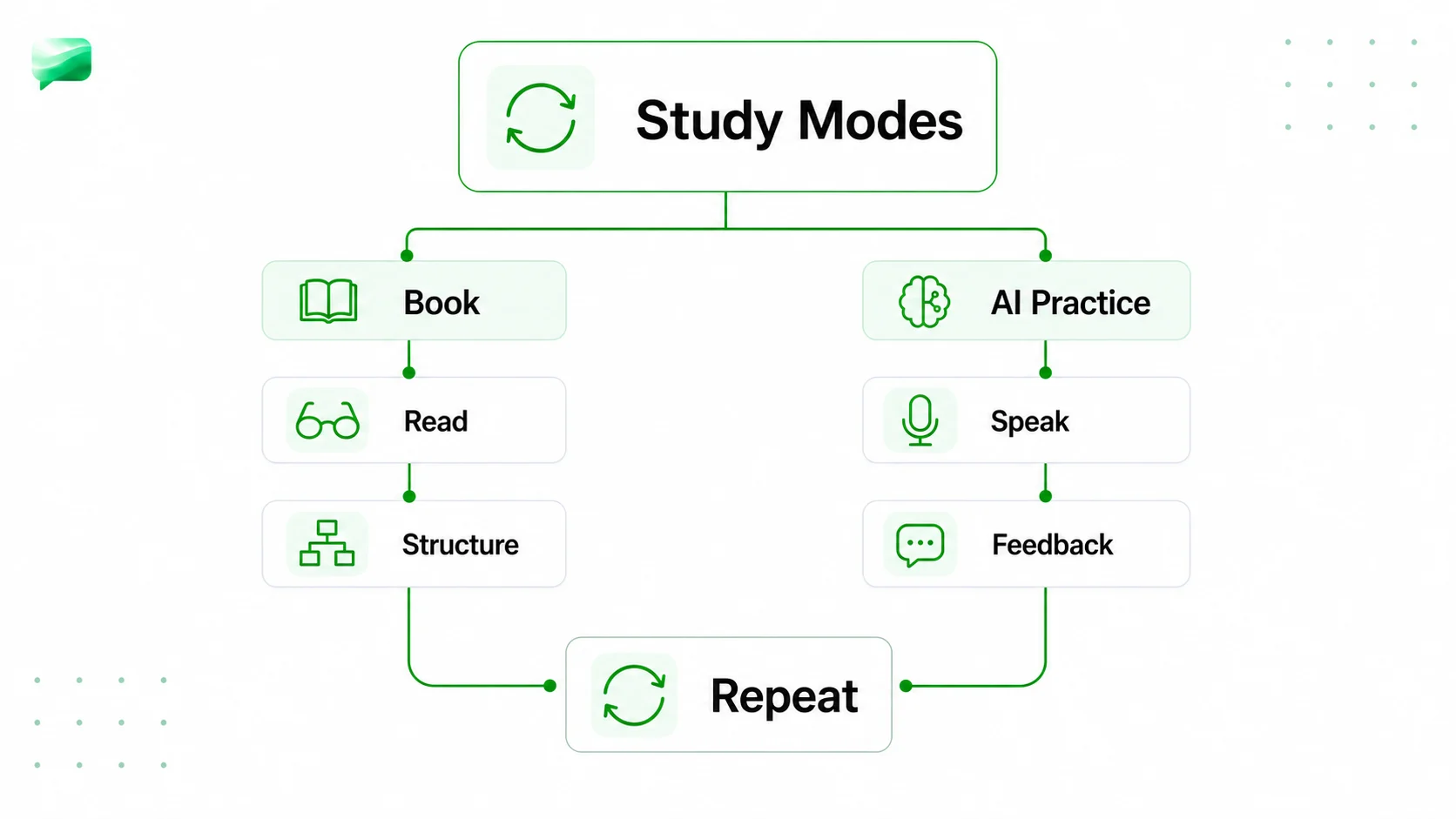
Case in Point teaches structures on paper. You read a case, sketch a structure, compare to the answer, move on. It is passive and asynchronous: fine for foundation building, useless for testing delivery. A good bridge is studying worked case interview examples first, so you know what good delivery looks like before you practice it live. AI case practice forces active reps. You hear the prompt, structure live, walk through analysis, get scored, and review feedback. The book teaches you what a good structure looks like; live practice teaches you to deliver one. Here is the split, skill by skill:
Voice-based practice most closely simulates the actual interview, where you speak under time pressure with no chance to redraft. The honest read: use the book to learn what good looks like, then spend most of your hours in graded reps. Top candidates use both.
Two rows in that table are the ones the book genuinely cannot cover: delivery and feedback. The only way to close them is to run a full case out loud and read the grade afterwards.
Profitability · medium
Practice a real retail profitability case
Matched to this article: a live retail profitability case with an AI interviewer. Free, scored on every step.
What changed in the 12th edition?
The 12th edition (2023) is the most current version. The substantive additions over earlier editions:
- Consultant's mindset chapter. New material on hypothesis-driven thinking. Most useful single addition.
- Graph and chart analysis section. Worked examples on data interpretation. Applicable to BCG Casey and parts of McKinsey Solve.
- Updated resume and cover letter guidance. Refreshed for current MBB recruiting cycles.
- 40 full strategy cases. Same case count as the 11th edition; some refreshed examples.
- Case starts exercises. Abbreviated case beginnings for structuring practice.
If you own the 11th edition (2020), the upgrade is marginal: the consultant's mindset chapter is the only meaningful new content. If you own the 10th edition (2018) or earlier, the upgrade is worth it for the graph analysis section. Buy new from Amazon or Audible.
Inside three weeks of an interview, the book is a worse use of time than direct case practice. See our last-minute case interview prep guide.
How should you use Case in Point in your prep?
A practical reading plan if you start with this book:
- Week 1. Chapters 1-4 (case anatomy, interviewer expectations). Skim the Ivy Case System chapter once. Do not memorize the 12 frameworks. Run the free case method lesson alongside it so you have a way of building structures, not a list of them.
- Week 1-2. Work the market sizing chapter and 5 market sizing cases. Pair the reading with our market sizing step by step guide, then lock the method in with timed market-sizing drills.
- Week 2-3. Drill the mental math section. Add 15-20 minutes of daily case math drills so the arithmetic is automatic under pressure.
- Week 2-4. Work 15-20 of the 40 strategy cases. Build a custom structure first, then compare to the book's. Two scored structure drills a week will tell you whether your own trees hold up, which the book cannot.
- Week 3-6. Move to live practice. Run a free voice case twice a week so the book becomes reference, not primary resource, and you get scored on delivery, not just structure.
- Week 6+. Format-specific prep: the McKinsey Solve assessment, BCG Casey (read the guide and practise it in the Casey simulator), and Bain SOVA. Case in Point does not cover these. Add the behavioral half here too: the McKinsey PEI guide and the behavioral interview guide cover what the book skips.
Reading 200 more pages of Cosentino does less for your offer odds than 5 live cases with feedback.

Growth · easy
Practice a real consumer goods growth case
Matched to this article: a live consumer goods growth case with an AI interviewer. Free, scored on every step.
Sources and Further Reading (checked June 17, 2026)
- Case in Point 12th Edition on Amazon: amazon.com/Case-Point-12-Interview-Preparation
- Case in Point 12th Edition (Kindle): amazon.com/Case-Point-12th-Interview-Preparation-ebook
- Case in Point audiobook (Audible): audible.com/pd/Case-in-Point-12th-Edition-Audiobook
- Marc Cosentino bio at Case Questions: casequestions.com/about-us
- McKinsey interviewing overview: mckinsey.com/careers/interviewing
- Wall Street Oasis discussion on Case in Point: wallstreetoasis.com/forum/consulting/is-case-in-point-still-good
- Hacking the Case Interview review: hackingthecaseinterview.com/pages/case-in-point-book-review
Frequently asked questions
Resources and related guides
- Practice a real case interviewPractice
- Browse all free resourcesResource hub
- Case Interview Examples: 40+ From McKinsey, BCG, Bain & More (2026)Getting Started · Feb 6, 2026
- Case Interview for Engineers and STEM Candidates: The Complete Guide (2026)Getting Started · Mar 31, 2026
- Case Interview Prep for Career Changers: Turn Your Background Into an AdvantageGetting Started · Mar 10, 2026
- Free Consulting Case Books: Wharton, Booth, INSEAD PDFs (2026)Getting Started · May 9, 2026