
Best Case Interview Books 2026: Ranked, Scored, and What to Skip
Best consulting and case interview books for 2026, including Case in Point, Case Interview Secrets, Crack the Case, Interview Math, and what to skip.
On this page
If you are comparing consulting books in 2026, read 2-3 case interview books maximum, then shift to live practice, starting with worked case interview examples so you see the fundamentals applied before your first rep. Case Interview Secrets by Victor Cheng is the best starting point because it explains how interviewers actually score candidates. Interview Math by Lewis Lin provides 60+ quantitative practice problems. Crack the Case System by David Ohrvall offers 40+ cases with 160 companion videos. Skip Case in Point as primary prep - its rigid 10+ framework system is what interviewers penalize. Pair books with 20-30 hours of live practice for maximum ROI.
Books teach concepts. Practice builds skill.
After reading, you need live reps. Practice cases with AI coaching that scores your structure, math, and communication in real time.
Consulting Books 2026: Head-to-Head Comparison
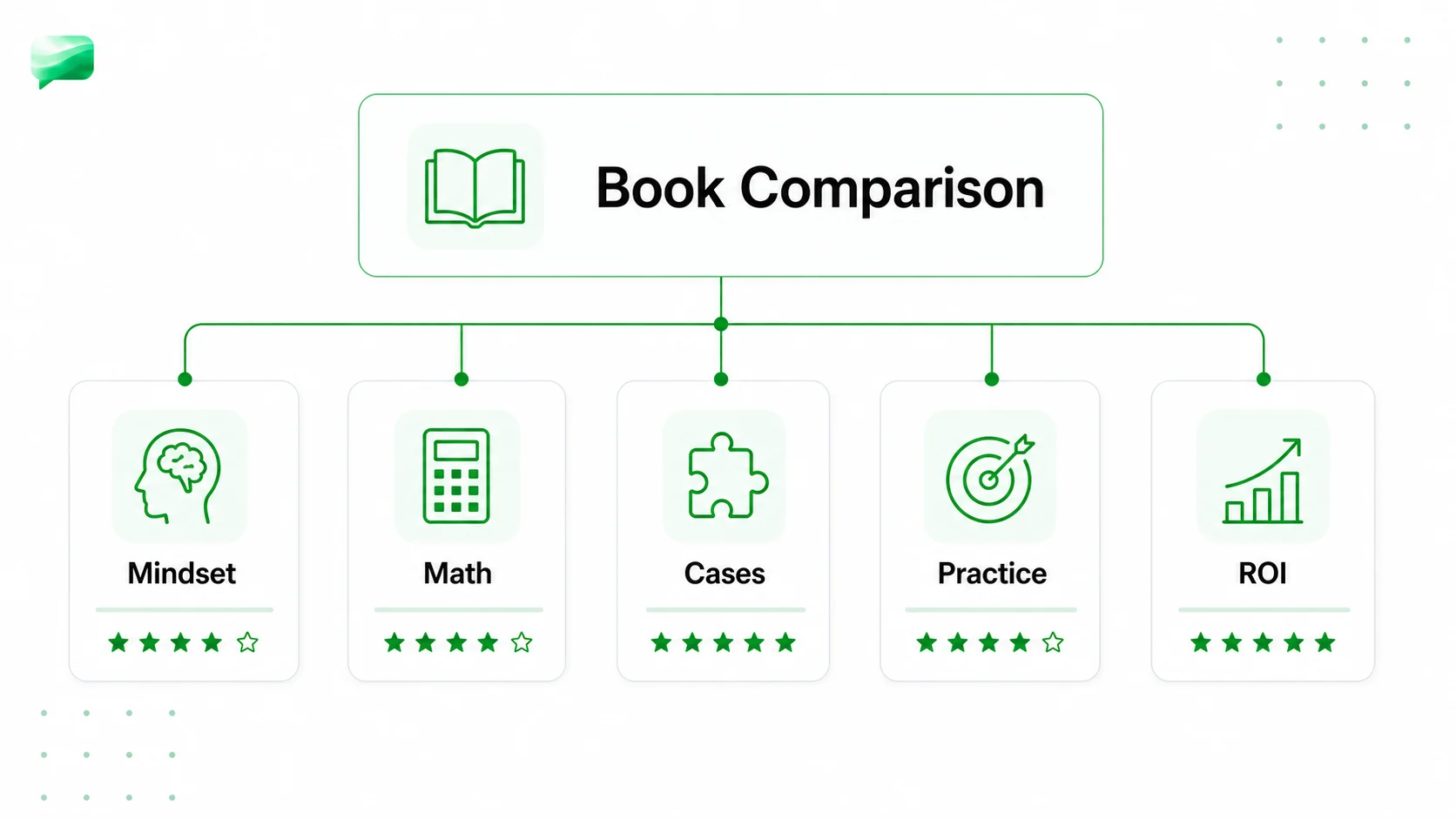
Every recommendation below is based on what helps candidates pass interviews in 2026, not what sells the most copies. Case Interview Secrets earns the top rating for its interviewer-perspective insights; Interview Math is essential for quantitative weakness; Case in Point scores lowest because its framework system actively hurts candidates.
Case Interview Secrets: Best Overall
Victor Cheng, a former McKinsey consultant and interviewer, explains the interview from the interviewer's side of the table. The book teaches hypothesis-driven approaches that top firms want rather than framework memorization, with specific examples of good vs. bad candidate responses (Source: Management Consulted review).
Published in 2012 and not significantly updated, so it lacks coverage of online assessments like BCG's Casey chatbot or McKinsey's Solve. No practice cases are included; you need a separate source.
- Strength: Interviewer-perspective insights more valuable than any framework book
- Gap: No practice cases; competitors have also read it
- Verdict: Read first, then supplement with math and practice sources
Interview Math: Best for Quantitative Skills
Lewis Lin's Interview Math contains 60+ practice problems with step-by-step solutions covering percentages, CAGR, break-even analysis, NPV, market sizing, and profitability. Problems are framed as business scenarios rather than abstract exercises, mirroring actual interview conditions (Source: Lewis Lin official).
Narrowly focused on math only; does not teach case structure or communication. Some problems exceed typical first-round difficulty.
Worked Example: Interview Math-Style Problem
Problem: A coffee chain has 1,200 stores, each generating $850K annual revenue at 12% margin. An 8% price increase is estimated to reduce visits by 5%. Should they implement it?
- Current revenue: 1,200 x $850K = $1.02B
- New per-store revenue: $850K x 1.08 x 0.95 = $850K x 1.026 = $872,100
- New total revenue: 1,200 x $872,100 = $1.047B (+$26.5M, +2.6%)
- At same 12% margin, profit increase: ~$3.2M
The 8% price increase more than offsets the 5% volume decline. Long-term customer loyalty and competitive response require further analysis.
Reading the math is not the same as doing it under pressure. Drill the exact skill the book targets with real reps:
Interactive drill set. Write an answer before revealing the worked solution, then continue into Road to Offer for scored practice and AI feedback.
Try quick mental math free - timed percentages, growth rates, and break-even problems.
Crack the Case System: Best for Practice Volume
David Ohrvall, a former Bain manager and Wharton MBA, built this from live workshop experience with 60,000+ students at Harvard, Stanford, Wharton, INSEAD, Oxford, and Cambridge, the same programs that circulate free MBA casebooks like the Wharton case book. The book provides 40+ fully worked cases spanning profitability, market entry, M&A, and pricing, plus 160 companion videos.
At ~$35, it is the most expensive option. Some reviewers note the framework system feels convoluted compared to simpler approaches.
- Strength: Most practice material per dollar: 40+ cases with video walkthroughs
- Gap: Framework system can feel over-engineered
- Verdict: Best value for volume practice after reading Case Interview Secrets
Case in Point: Read with Caution
Marc Cosentino's Case in Point has been Amazon's best-selling case interview book for a decade and is also the most criticized among prep coaches. Its "Ivy Case System" teaches 12 rigid frameworks to memorize and apply by case type. According to Hacking the Case Interview, interviewers penalize candidates who apply pre-defined frameworks instead of building custom structures. For the full verdict on where it still helps and where it hurts, read our dedicated Case in Point book review.
The approach was effective in the early 2000s when interviews were more formulaic. In 2026, every MBB firm explicitly penalizes framework recitation. Your competition has also read it, making the frameworks immediately recognizable.
- What still works: Business vocabulary and case type introduction
- What hurts: Ivy Case System encourages "match case to framework" thinking
- Verdict: Background reading only; do not use its frameworks in live interviews
Hacking the Case Interview: Best for a Fast Overview
Taylor Warfield, a former Bain manager and interviewer, wrote Hacking the Case Interview as a shortcut guide that covers the full process (resume, networking, behavioral, and case) in one compact volume. The case section favors flexible structures over rigid templates, which ages better than Case in Point's framework system.
Because it tries to cover everything, the case content is shallower than dedicated titles like Case Interview Secrets, and the practice case volume is limited. Treat it as an orientation read, not your only resource.
- Strength: Broad, fast overview of the whole recruiting process in one short book
- Gap: Shallower on case technique and light on practice cases
- Verdict: Useful early skim; go deeper with Case Interview Secrets and a dedicated practice book
The McKinsey Way: Context, Not Interview Prep
Ethan Rasiel, a former McKinsey associate, wrote The McKinsey Way (1999) about how McKinsey consultants actually work: hypothesis-driven problem solving, the "MECE" mindset, and how engagements run. It is a readable window into consulting culture and the thinking style firms value.
It is not an interview-prep book. There are no practice cases, no math drills, and no interview-specific guidance, and at 25+ years old it predates modern digital assessments entirely. Read it for context and motivation, not technique.
- Strength: Clear, engaging look at how consultants think and operate
- Gap: Not interview prep; no cases, no math, and dated for 2026
- Verdict: Optional background read; do not rely on it to prepare for the case itself
Done reading? Start practicing
Books build knowledge. Practice builds skill. Solve real cases with AI coaching that gives instant feedback on structure, math, and communication.
Optimal Reading Order
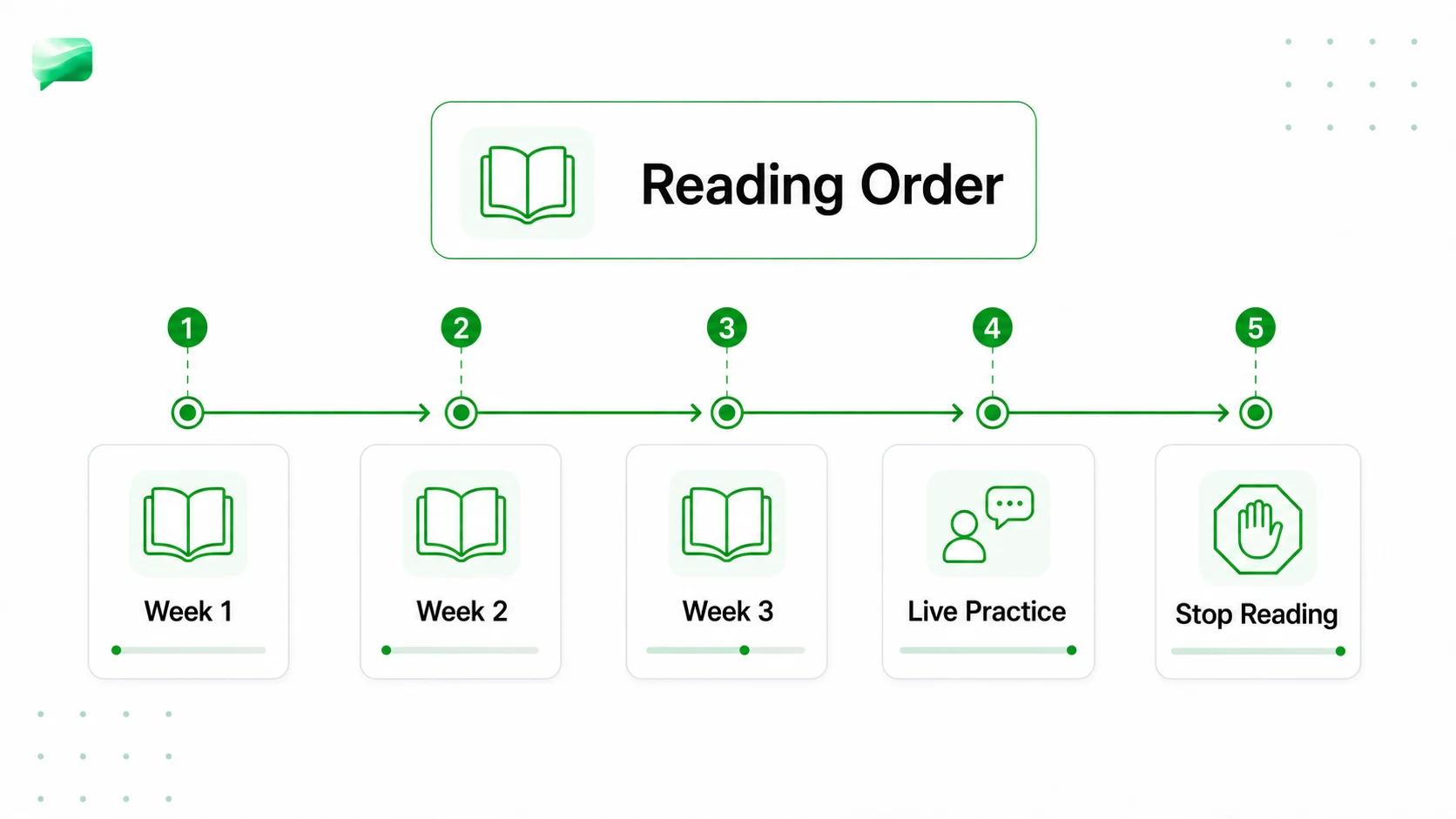
If starting from zero, this sequence maximizes prep ROI. After 3 weeks of reading, live practice yields dramatically higher returns than book #4; shift to case practice by Week 4.
Case Interview Book Reading Order
- 01
Week 1: Case Interview Secrets. Build mindset: understand what interviewers score and why
- 02
Week 2: Interview Math. Lock in quantitative skills: do every problem, not just read
- 03
Week 3: Crack the Case System. Practice 15-20 cases with video walkthroughs
- 04
Week 4+: Live practice. Shift from books to live cases with partners or AI tools
Common Mistakes When Using Books
Reading 5 books without practicing a single case is the most common prep error. After each chapter, apply the concept to a sample case. Memorizing frameworks verbatim triggers interviewer recognition; internalize the logic and build custom structures instead.
Skipping math is a gamble on the skill that fails candidates most often. Using outdated editions (some unchanged since 2012) misses online assessments and virtual interview formats now standard at all firms.
Related Guides
- Case interview prep guide: full roadmap from zero to offer
- Case interview frameworks guide: build custom frameworks, not book templates
- How to practice case interviews: transition from reading to live practice
- Free case interview preparation resources: supplement books with free cases
- Road to Offer free case book vault: free downloadable casebooks to practice the cases these books only describe
- Best case interview prep tools 2026: digital tools for practice beyond books
- Consulting interview prep timeline: when to read, practice, and simulate
Ready to go beyond books?
Books build knowledge. Practice builds offers. Solve real case interviews with AI coaching that scores your structure, math, and communication.
Sources (checked June 17, 2026)
- Hacking the Case Interview best case interview books review: https://www.hackingthecaseinterview.com/pages/best-case-interview-books-review
- IGotAnOffer case interview books reviewed: https://igotanoffer.com/blogs/mckinsey-case-interview-blog/case-interview-books
- Management Consulted Case Interview Secrets review: https://managementconsulted.com/case-interview-secrets/
- Hacking the Case Interview Case in Point review: https://www.hackingthecaseinterview.com/pages/case-in-point-book-review
- Lewis Lin Interview Math (official): https://www.lewis-lin.com/interview-math
- David Ohrvall Crack the Case System: https://www.amazon.com/Crack-Case-System-Conquer-Interviews/dp/0996779205
- Wall Street Oasis best case interview guides: https://www.wallstreetoasis.com/forum/consulting/best-case-interview-guides
Frequently asked questions
Resources and related guides
- Free consulting case books from top schoolsPractice
- Browse all free resourcesResource hub
- What Is a Case Interview? Beginner Guide + ExampleGetting Started · Feb 19, 2026
- Consulting Behavioral Interview: STAR + 20 QuestionsGetting Started · Feb 19, 2026
- Consulting Fit Interview Questions: 30 Examples + AnswersGetting Started · Mar 1, 2026
- Free Case Interview Prep Resources: The Best Tools That Actually Work (2026)Getting Started · Mar 10, 2026