
Cultural Fit Interview Questions for Consulting
Prepare cultural fit interview answers for consulting with story selection, STAR structure, firm motivation, and follow-up practice.
Cultural fit interview questions in consulting test whether your past behavior matches the work: client pressure, team problem solving, leadership, conflict, feedback, and motivation for the firm. McKinsey's official interviewing page names personal impact, entrepreneurial drive, inclusive leadership, and problem solving skills as qualities it looks for, and suggests preparing two personal examples that demonstrate those areas. Bain says interviews are designed to help candidates showcase the skills needed for the role and may include behavioral questions. In 2026, the strongest prep is not memorizing polished monologues. Build a story bank, know the point of each story, and practice answering follow-up probes with specific actions you personally took.
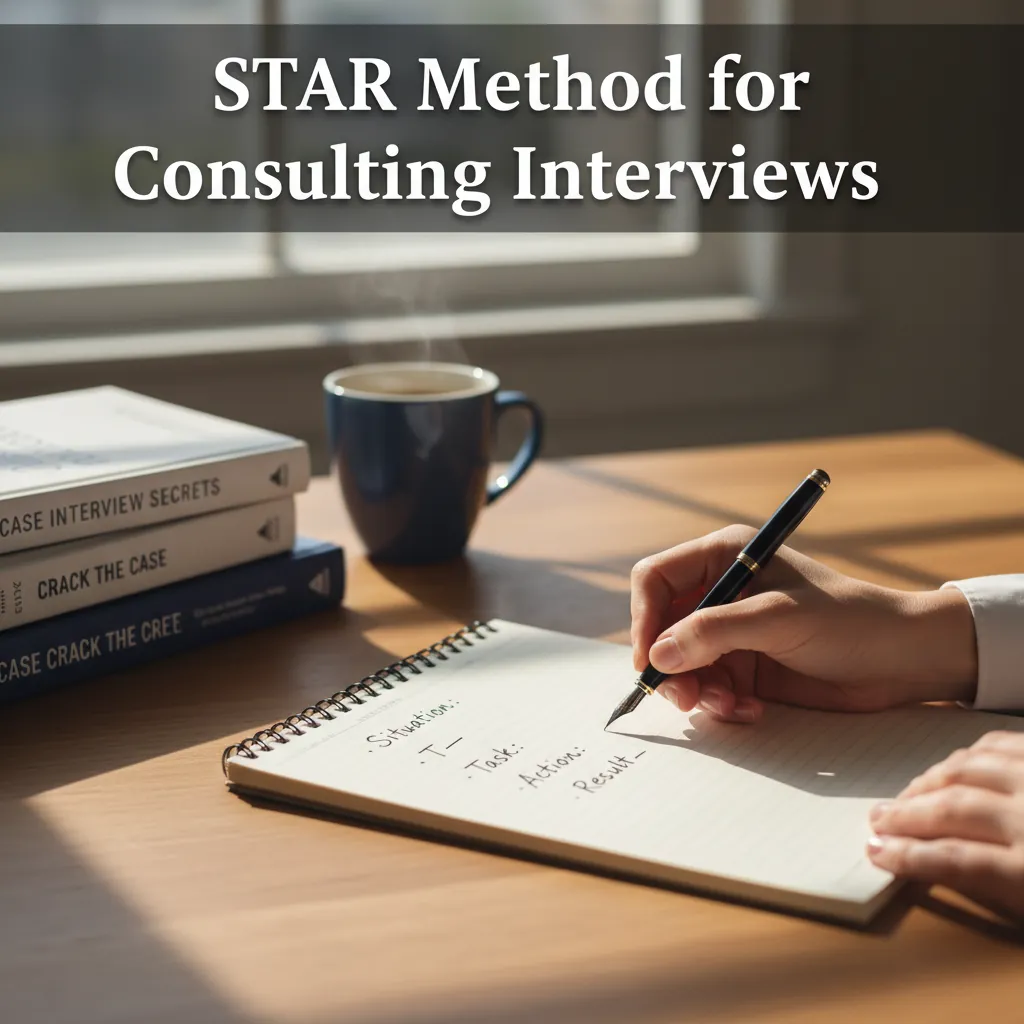
Read the companion guide on STAR method for consulting interviews if you need the broader owner page before using this focused guide.
Use this guide as a working checklist during practice, not just as reading material. After each section, pick one behavior to test in a mock case, then review whether the interviewer could follow your objective, structure, math, and recommendation without extra explanation.
What are cultural fit interview questions in consulting?
Fit answers need proof. For this topic, prepare stories that show behavior evidence, motivation, teamwork through specific actions you personally took, not team-level summaries.
Use a compact setup, explain the tension, and spend most of the answer on your decisions. The source anchor here is McKinsey Interviewing. The source gives context, but the interviewer is judging your behavior.
Good follow-up answers are concrete. If asked for detail, name the tradeoff, the stakeholder, or the moment you changed your approach. Pair this with McKinsey PEI guide when you want more examples.
In a mock case, test this by stopping after the section and asking whether your conclusion would change the client's decision in the live interview itself.
What qualities do firms look for?
Interviewers are looking for observable evidence, not polished language. Show personal impact, entrepreneurial drive, inclusive leadership, problem solving through how you clarify, calculate, communicate, and adapt when the prompt changes.
A strong answer makes the thinking visible without narrating every tiny step. The source anchor here is McKinsey Interviewing. Anchor the broad expectation in the source, then prove it through specific interview habits.
After each major step, give a short synthesis so the interviewer knows what changed. That habit turns scattered work into a scored performance. Pair this with consulting interview process when you want more examples.
A useful drill is to repeat the same move on a new prompt until the behavior becomes automatic rather than scripted.
What cultural fit questions should you prepare?
Practice should be narrower than most candidates make it. Split the work into why consulting, conflict, leadership, failure, then use full cases only to test whether those pieces hold together under pressure.
Review one recorded case or written solution at a time and pick the single weakest behavior to fix next. The source anchor here is McKinsey Interviewing. That keeps prep honest without inventing fake precision.
The goal is repeatability. By interview day, your opening, structure, math narration, and final recommendation should feel familiar even when the case topic is new. Pair this with case interview body language when you want more examples.
If this step feels vague, write the answer in plain business language before turning it into interview narration.
How should you structure your answers?
Build the structure from the case objective instead of dropping in a memorized framework. A strong structure for this topic makes STAR, specific actions easy to inspect.
Use buckets that are mutually exclusive enough to avoid overlap and practical enough to guide analysis. The source anchor here is McKinsey Interviewing. The source should shape the guardrails, while your own issue tree should answer the specific prompt.
Once the structure is on the table, prioritize the branch most likely to change the recommendation. That is how the case starts feeling like client work instead of a checklist. Pair this with STAR method for consulting interviews when you want more examples.
The interview version should sound calm and specific: what you know, what you assume, and what you would check next.
How do follow-up probes work?
Treat this as a decision problem, not a vocabulary definition. Focus on details, personal contribution, because those are the pieces that change what you would recommend.
Start by clarifying the objective, then separate facts from assumptions before you analyze. The source anchor here is McKinsey Interviewing. Use the source to keep claims grounded while still making the advice practical.
The candidate move is to explain what you would do next and why that step matters. Pair this with McKinsey PEI guide when you want more examples.
When reviewing your practice, score the behavior you can control instead of judging the whole case as good or bad.
How should you build a fit story bank?
Fit answers need proof. For this topic, prepare stories that show story bank, practice aloud through specific actions you personally took, not team-level summaries.
Use a compact setup, explain the tension, and spend most of the answer on your decisions. The source anchor here is McKinsey Interviewing. The source gives context, but the interviewer is judging your behavior.
Good follow-up answers are concrete. If asked for detail, name the tradeoff, the stakeholder, or the moment you changed your approach. Pair this with consulting interview process when you want more examples.
This is also where partner feedback helps, because a listener can tell whether the logic was easy to follow.
Frequently Asked Questions
What are cultural fit questions in consulting?
They are behavioral questions that test motivation, teamwork, leadership, conflict handling, feedback, and client readiness.
How many fit stories should I prepare?
McKinsey suggests preparing two personal examples for its key areas, but candidates should build a broader story bank for different prompts.
Is cultural fit the same as McKinsey PEI?
They overlap, but McKinsey PEI is usually deeper and more probing around specific personal examples.
Should I use STAR for consulting fit answers?
Yes, but keep it conversational and focus on your specific actions, tradeoffs, and result.
What is the biggest fit interview mistake?
The biggest mistake is giving polished but vague stories that hide your personal contribution.
Sources and Further Reading (checked 2026-05-01)
FAQ
Frequently asked questions
Keep reading
Related articles
First vs Second Round Interview: What Changes
First-round interviews test baseline fit and problem solving. Second-round interviews test depth, judgment, and role readiness.
STAR Method for Consulting Interviews: Worked Examples and MBB Prep Guide (2026)
The STAR method for consulting interviews requires three upgrades over the generic version. Full breakdown with worked examples, MBB-specific differences, and common mistakes.
Case Interview Mistakes to Avoid
Avoid the case interview mistakes that hurt structure, math, exhibits, synthesis, communication, and final recommendations.