
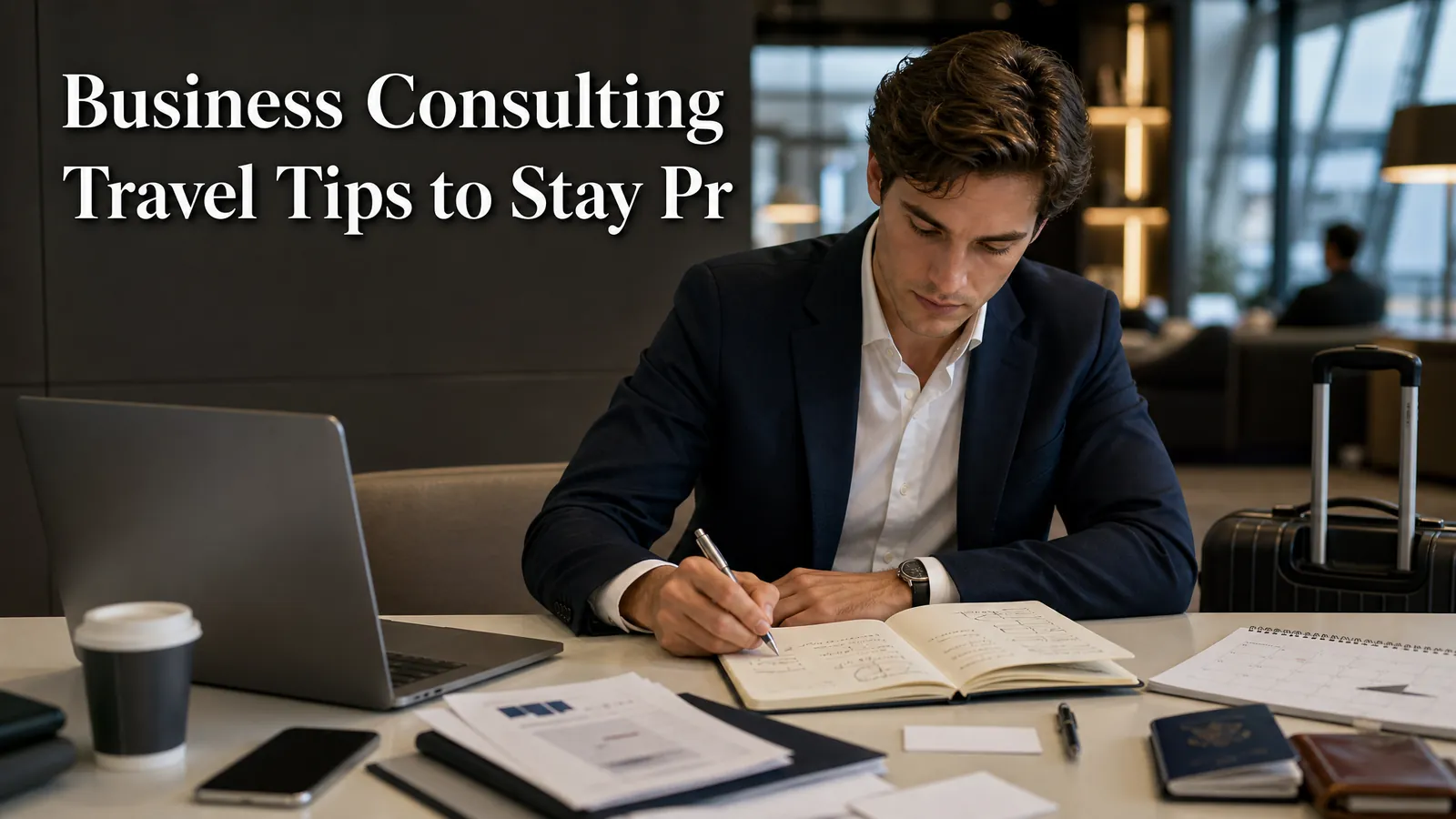
Business Travel Tips for Consultants
Practical business travel tips for consultants: protect deep work, sleep, client follow-ups, expenses, and case prep while traveling.
Business travel in consulting is productive when the trip is organized around the client deliverable, not around airport efficiency. The goal is to arrive prepared, protect focused analysis time, communicate clearly with the team, and avoid letting travel admin weaken the work. That means planning meetings, work blocks, follow-ups, expenses, sleep, food, and recovery before the week starts. It also means knowing which work fits a moving environment and which work needs a proper desk, stable Wi-Fi, and confidentiality. For candidates, travel is also a due-diligence topic. Travel expectations can vary by firm, office, practice, client, project, staffing model, and role, so generic consulting lifestyle stories are not enough. Ask specific questions, track the answers, and keep case interview prep resilient enough that your structure, math, chart reading, and synthesis do not disappear when your calendar gets messy.
What productive consultant travel actually means
A productive consulting trip starts with the next decision the team needs to support. If the client meeting is tomorrow, productivity is not clearing every unread email in the lounge. It is knowing the meeting objective, the analysis still needed, the person responsible for each workstream, and the open questions that could block the recommendation.
That is why role clarity matters. A consultant supporting a workstream lead has a different travel rhythm from a manager handling senior client alignment. A strategy case can create different site-time needs than implementation or operations work, which is why comparing strategy vs operations consulting helps candidates avoid oversimplified lifestyle assumptions.
Use official firm career pages, such as Bain Careers, for broad recruiting context, but do not stretch them into universal travel rules. The practical rule is simpler: verify the travel reality for the office, practice, client type, and role you are actually pursuing.
Before-the-trip checklist for consultants
Before a client-site week, build the trip around the work calendar first. Confirm client meetings, internal team check-ins, travel windows, protected work blocks, and the follow-up window after each important conversation. If the calendar has no quiet block for analysis, writing, or synthesis, fix that before you arrive tired and reactive.
Then handle admin before it becomes cognitive drag. For international travel, the U.S. Department of State international travel checklist is a useful reminder to check destination requirements, required documents, medication rules, and copies of important travel documents. For packing, the FAA PackSafe guidance is a practical prompt to verify baggage and electronics rules instead of assuming every battery, device, or work item can go anywhere.
Pack for output, not for the image of travel. Bring the laptop, charger, adapter, headphones, notebook, portable mouse, backup access method, and any client-approved login or file-access requirements. Add a health setup: sleep plan, meals you can tolerate, hydration, medications if relevant, and a realistic movement plan. Small decisions made before the trip protect sharper thinking later.
How to protect deep work between flights, hotels, and client meetings
Travel breaks concentration because it chops the day into fragments. Treat those fragments as a work menu, not a blank promise to be productive everywhere.
Use airports and short flight windows for low-context work: inbox triage, notes cleanup, reading client background, updating a task list, reviewing fit stories, or doing light flashcards. Avoid complex modeling, client-ready writing, confidential work, or ambiguous synthesis in noisy public spaces. If the work would be embarrassing or risky on a visible screen, it does not belong in an airport chair.
Save deep work for a stable environment: hotel desk, client-approved workspace, office room, or home-base recovery block. That is where you build a model, write a recommendation, interpret exhibits, practice case math, or prepare a final answer. OSHA computer workstation guidance notes that temporary work setups should consider component placement, comfort, and the work environment, which is a useful reminder when a hotel desk becomes your analysis room.
Case prep should fit this reality when your schedule gets irregular. Use lightweight drills during fragments, then save a full case for a stable block where you can think properly.
Before you join a firm, use networking conversations to ask current consultants sharper travel questions, then follow up cleanly instead of relying on vague lifestyle rumors.
Examples: airport time, hotel evenings, client site, and return travel
Airport time is best for cleanup, preparation, and short reviews. Read client background, organize notes, update your task list, or do a short drill. Avoid work that needs privacy, full concentration, or polished client-ready output.
Hotel evenings need more discipline. Set up the desk, review the next day's client agenda, identify the highest-value analysis block, and do that before opening low-value admin. Close by writing tomorrow's questions, follow-ups, and risks. If you need to turn messy notes into a crisp recommendation, the Synthesis drill is the closest interview-prep version of that muscle.
Return travel is where small messes usually compound. Capture client follow-ups, expense notes, lessons learned, and open questions before memory fades.
Questions to ask recruiters and consultants about travel expectations
Travel expectations are too variable for folklore. Ask specific questions in networking calls, recruiting conversations, and office chats. The tone matters: you are not asking whether consulting is inconvenient. You are asking how strong consultants operate in that environment.
Try questions like: how does travel vary by office, practice, client location, and project type? What changes as consultants become more senior? How do teams communicate when people are split across offices, client sites, and remote days? What habits help new joiners stay useful on client-site projects? What do you wish you had known before your first travel-heavy project?
This is where consulting networking events tips connect directly to lifestyle due diligence. Use the networking and follow-up kit to turn those questions into cleaner coffee chats, then track firm-specific notes in the consulting application tracker. You can also fold the answer into a credible fit story, especially if your tell me about yourself consulting interview answer touches client work, travel, or pace.
Deloitte's careers page is another reminder to treat applying, interviewing, and onboarding as a process, not a single conversation. Use official channels for recruiting steps, and use consultant conversations for lived detail.
Mistakes that make consulting trips unproductive
The first mistake is treating travel perks as the point. Loyalty status, upgrades, and lounge access can make travel easier, but the goal is client output. If the trip ends with weak analysis, late follow-ups, or confused team communication, the travel system failed.
The second mistake is doing the wrong work in public. Airport work should not include sensitive client material or deep thinking that needs silence. Use fragments for fragments. Protect complex work for a real workspace.
The third mistake is delaying small admin. Expenses, notes, receipts, open questions, and follow-ups become expensive when they pile up. Capture them daily, especially after client meetings and return travel.
The fourth mistake is overpacking while forgetting the tools that protect output. A compact carry-on is useful only if it contains the charger, adapter, access setup, notebook, headphones, and backup plan you need to work.
The final mistake is assuming every consulting role has the same rhythm. Use consulting project team structure to understand why workstreams, managers, client collaboration, and role seniority shape the travel experience. CDC Travelers' Health also notes that travel can be stressful and can affect mental health, so recovery planning is part of the operating system, not a luxury.
Keep case skills sharp when travel breaks your routine
Travel exposes weak consulting habits because time, energy, and context are constrained. If your structure only works at a clean desk, it is not durable yet. If your chart reading collapses when tired, client exhibits will feel harder. If your synthesis depends on perfect notes, return-travel follow-ups will be vague.
Use fragmented windows for narrow reps. Start with the Case interview structure drill when you have a short block and need clean issue trees. Use the Free drill picker when the week is uneven and you want the right practice format without overthinking it. For exhibit-heavy reading, use the Chart and exhibit drill. For end-of-day recommendations, use the Synthesis drill.
When you have a stable block, run free case practice. That is the closest test of whether your structure, math, and synthesis still hold under pressure. It also connects directly to case interview rounds structure, because real interview performance depends on consistency across changing formats, interviewers, and energy levels.
A flexible practice path matters here: quick drills when the day is fragmented, full cases when you can focus, and targeted reps when travel reveals the skill that breaks first.
If your week is messy, use the free case to test whether the travel system is actually preserving the thinking that matters.
Sources and Further Reading (checked 2026-06-03)
- CDC Travelers' Health - Jet Lag
- CDC Travelers' Health - Mental Health and Travel
- U.S. Department of State - International Travel Checklist
- Federal Aviation Administration - PackSafe for Passengers
- Occupational Safety and Health Administration - Computer Workstations
- Bain & Company - Careers at Bain
- Deloitte US - Careers
FAQ
Frequently asked questions
Keep reading
Related articles
Best Consulting Networking Email Templates
Use consulting networking email templates for cold outreach, coffee chats, referral asks, event follow-ups, and thank-you notes without sounding generic.
Campus Consulting Clubs for Skills and Networking Success
Learn how to use campus consulting clubs for case practice, alumni networking, resume evidence, recruiter events, and a focused Road to Offer prep plan.
Coffee Chat Questions: Consulting Scripts, Questions, and Follow-Ups
Use these consulting coffee chat questions, scripts, examples, and follow-up templates to learn faster, build trust, and turn networking notes into better applications and interviews.
How to Convert Your Consulting Internship Into a Return Offer (2026)
Practical tactics to earn your consulting return offer—from day one through the final presentation. Includes firm-specific conversion rates and midpoint recovery advice.