
Is Consulting a Good Career? Pros, Cons, and Who It Fits (2026)
Is consulting a good career in 2026? The honest pros (pay, skills, exits, network) and cons (client control, travel, hours, up-or-out), plus who it fits.
On this page
Is consulting a good career in 2026? For the right person, yes: management consulting pays among the strongest early-career salaries, compresses years of business skill-building into months, and opens exits into strategy, private equity, tech, and operating roles that few first jobs match. According to Poets and Quants, 2025 post-MBA base pay at McKinsey and Bain reached about 192,000 dollars (BCG about 190,000 dollars) before bonuses, and public estimates put first-year undergraduate base pay near 112,000 to 115,000 dollars. The honest tradeoffs are just as real: the work is client-controlled, travel-heavy, reviewed constantly, and resets context every few weeks under an up-or-out model. So it is a strong career if you like ambiguity, variety, and fast feedback, and a weaker one if you want predictable routines, solo work, or long-term ownership of a single product. The one caveat worth naming: a great firm can still be a poor fit if the specific team you land on drains you.
If you are already set on one firm type, the consulting career path article helps you compare route choices. If your concern is profile strength rather than fit, the low-GPA consulting strategy guide covers how to build a more credible application story.
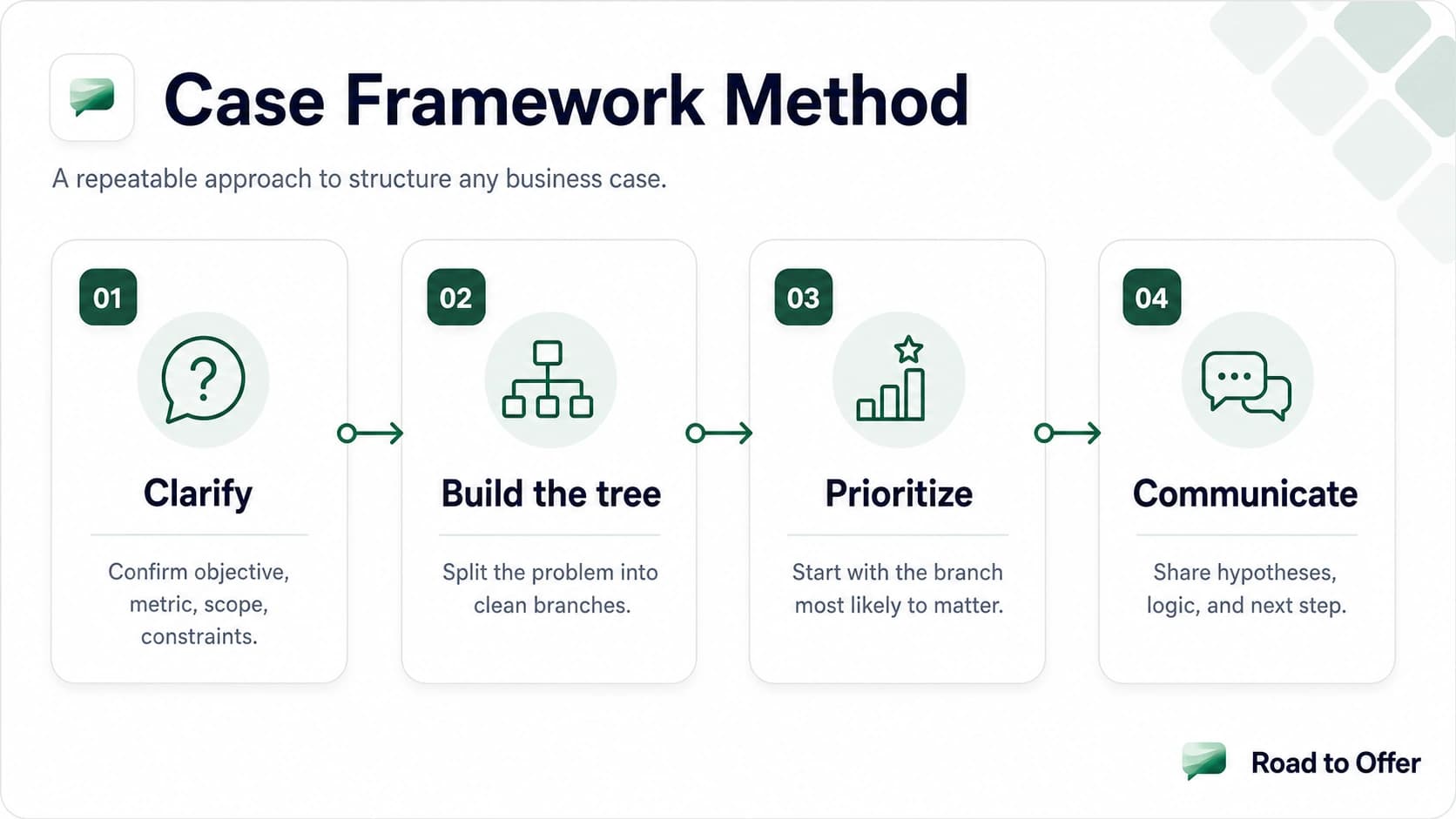
Learn the case method
One dense lesson, each step linked to the drill that trains it.
Is consulting a good career? The short answer
Consulting is a genuinely good career for people who are energized by moving problems, not settled ones. You will get partial data, imperfect context, and pressure to move from analysis to recommendation fast. That environment rewards a specific temperament, and it punishes people who need everything defined before they act. The rest of this guide is an honest ledger: the real upside, the real cost, and an honest read on who each side favors.
These are tendencies, not guarantees. Team, office, practice, and seniority shape the real experience. Treat any pay, hours, or travel number as role-specific until a recruiter or current employee confirms it.
The pros: what consulting actually gives you
Pay is strong from day one. Per Poets and Quants, 2025 post-MBA base salaries landed around 190,000 to 192,000 dollars at MBB firms before signing and performance bonuses, and public estimates put first-year undergraduate base pay near 112,000 to 115,000 dollars. Total packages rise quickly with bonuses and promotions. Pay is not a reason to join a job you will hate, but it removes money as an early constraint.
Skill compression is the real prize. In a short window you learn to structure ambiguous problems, run analysis under deadline, build clean slides, and defend a recommendation to senior people. Most first jobs teach one of those slowly. Consulting teaches all four at once, which is why the skill set transfers so widely.
Exit optionality is unusually broad. Consultants move into corporate strategy, private equity and venture, startups and operating roles, and senior functional jobs. The brand and the transferable toolkit keep more doors open, for longer, than most starting roles.
The network compounds. You work beside sharp peers and alumni who scatter across industries. That network becomes a durable career asset: warm intros, references, and future roles that you cannot buy back later.
Strong candidates tend to share four habits: structured thinking (splitting a messy prompt into clean, ranked branches), real curiosity (asking what changed and what evidence would move the answer), clear communication (idea to concise language across teammates and clients), and resilience (holding standards through pivots and compressed timelines).
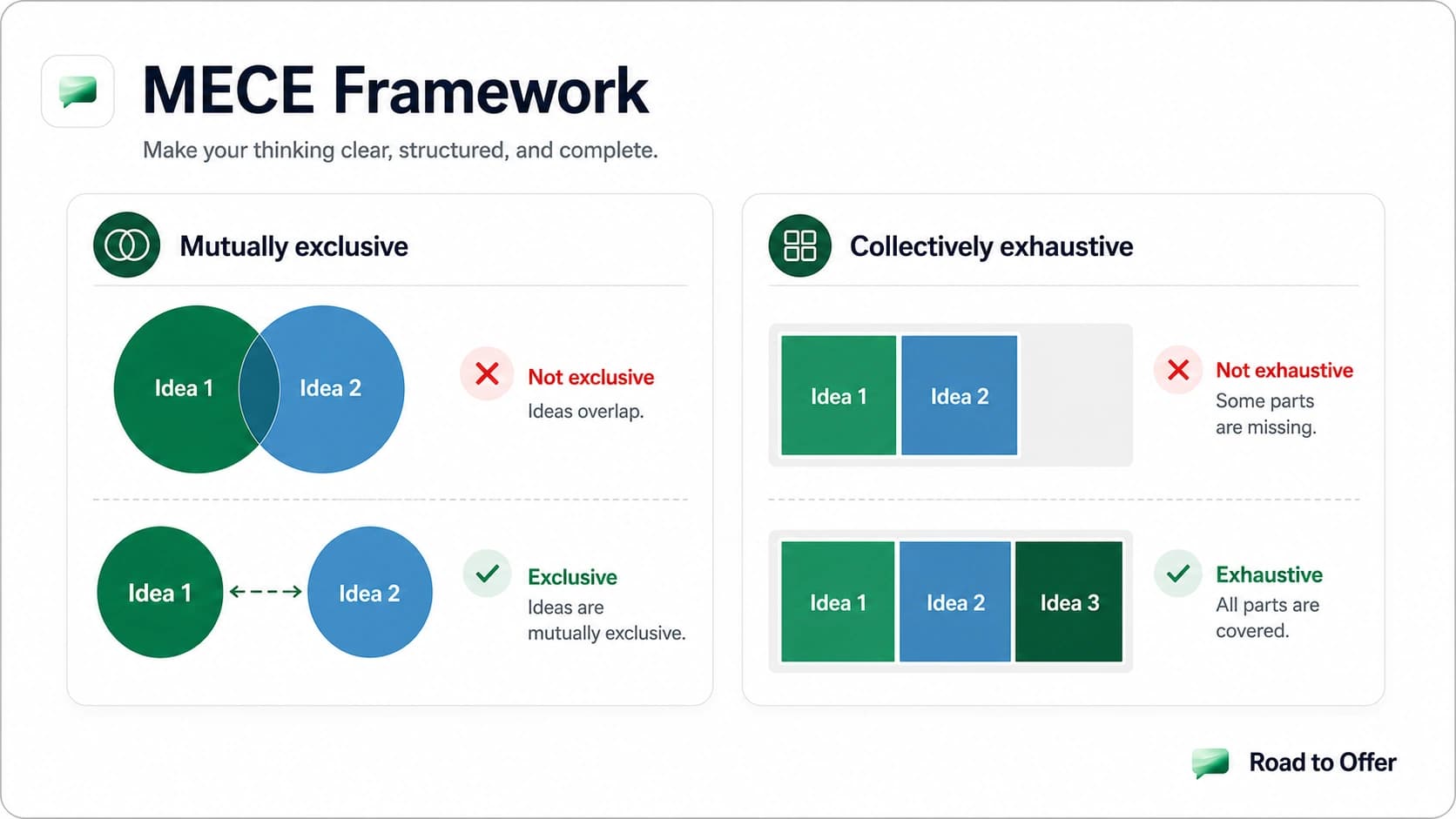
Learn frameworks properly
Pick and adapt structures instead of memorizing buckets.
If you want a practical development plan, pair this with the consulting resume guide and the behavioral interview guide. Clean stories tend to force clearer thinking about your own fit first.
The cons: what makes consulting hard
There is no reason to sugarcoat this. The upside comes with a real bill.
You do not control the work. The client sets the topic, the scope, and often the timeline. A project you find dull is still your project, and a fire drill from a client executive reorders your week without asking.
Travel and hours are demanding. Many roles still involve regular travel to client sites, and hours run long and unpredictable during active phases. Even remote-heavy staffing can compress a month of work into a bad two weeks.
Context churn is constant. You absorb a new industry, a new team, and a new problem every few weeks, then do it again. Some people find that thrilling. Others find that they never get to go deep on anything, and the resets drain them.
Feedback is relentless, and the model is up-or-out. Frequent review from peers and managers speeds growth, but it can feel like constant external pressure. On top of that, the firms expect steady promotion. Staying flat for too long is not a stable option, so the clock is always running.
Most people underestimate client-facing fatigue: even good work becomes tiring when you defend assumptions and change direction in real time, day after day. You rarely fail at consulting for lack of intelligence. You struggle when your communication and recovery habits are not resilient enough for the pace.

Who consulting fits, and who should skip it
Read these two lists honestly. If most of the left column sounds like relief and most of the right column sounds like a warning you would ignore, consulting is probably a strong fit. If it is the reverse, take that signal seriously.
Consulting tends to fit you if:
- You stay functional under ambiguity and can still make a recommendation with partial data.
- You like variety and get bored owning one narrow thing for years.
- You want fast feedback and treat blunt review as fuel, not threat.
- You enjoy the client-facing moment: explaining tradeoffs and defending a call out loud.
- You value optionality and want many doors open after two or three years.
You should probably skip it (or wait) if:
- You want predictable scope and a calendar you control.
- You want to specialize deeply in one domain from day one.
- You want to own one product or team and watch it improve over years.
- Travel and long, unpredictable hours are dealbreakers for your life right now.
- Constant external pressure and an up-or-out clock would quietly wear you down.
Neither column makes you better or worse. They describe different working temperaments, and the honest goal is to match the job to yours rather than to its prestige.
Consulting vs the alternatives
Fit is easier to judge against a real alternative than in the abstract. Two comparisons cover most readers.
Consulting vs investment banking. Both pay well and work you hard, but the texture differs: banking concentrates on deals and financial execution with punishing hours, while consulting spreads across problem types with more travel and more client-facing time. The consulting vs investment banking guide breaks down pay, hours, and exit paths side by side.
Consulting vs operator roles. Operator paths (product, operations, strategy inside a company) often give ownership first in one domain, where mastery comes from sustained attention to one product or function. Consulting gives breadth first and ownership second, in short slices of active problems. If you want one process, one product, and measurable progression in one lane, an operator role can feel more natural. For a structured look at the MBB path specifically, use the what is MBB consulting guide, and top consulting firms if you want the tier map beyond MBB.
The useful question is not which path is objectively better. It is where you want your ownership to live: deep in one domain over years, or broad across many resets that each build transferable thinking.
How can you test your fit before applying?
Do not rely on vibes. Run this sequence over a few weeks and repeat as needed.
Start with case practice in short blocks, focused on structure, math, and clear synthesis. You do not need perfect style yet, only clear movement from hypothesis to recommendation. Then run coffee chats with current or former consultants, and ask what they enjoy, what frustrates them, and what a typical week actually looks like. One hour of listening beats ten blog articles. Next, track your own energy: if you feel sharper after each session, that is signal; if you become drained and avoidant, test alternatives early rather than waiting for a rejection. Finally, keep adjacent options alive so a single outcome does not define your process.
The goal is evidence, not narrative. Keep your notes in one place and review them weekly. If you want to browse the prompts before committing to anything, the case library is open without an account.
What should you do if you are unsure?
If the fit tests do not produce a clean yes or no, do not force a binary. Apply selectively where your current profile can gain signal, keep one or two operator-style targets alive as backups, and set a review point after each prep cycle. If case work and interview conversations improve together, keep consulting primary. If the same resistance shows up across multiple loops, widen the alternative set. Even if you never take a full-time consulting role, the problem framing, synthesis, and communication reps stay valuable across strategy, finance, and operations.
The fastest way to fill in that first row is one full case, start to finish, with a score at the end. If it energizes you, you have your answer.

Profitability · medium
Run one complete case before deciding
Energy / Retail
Sources and Further Reading (checked 2026-07-23)
Frequently asked questions
Resources and related guides
- Consulting application trackerPractice
- Browse all free resourcesResource hub
- Consulting vs Venture Capital: Career, Pay, and How to ChooseFundamentals · May 30, 2026
- Doctor vs MBB Consultant: Career Path, Salary, and Pivot Guide (2026)Fundamentals · May 1, 2026
- Engineering to Consulting: Entry Paths, Resume, and CasesFundamentals · May 1, 2026